While workplace aesthetics and trends evolve, the message an environment communicates about an organization is more enduring. The physical workplace consistently signals what an organization values and how it operates, shaping how employees interpret their daily experience at work.
Furthermore, thoughtfully designed workplace environments have a measurable effect on employee experience. Research shows that the layout, interior design, and surrounding environment of the office can significantly impact employee satisfaction and retention (Shetty et al., 2025).
As a result, proactive leaders are treating workplace design as a strategic business tool, investing in curated environments and corporate art programs that align spatial design with company culture to support engagement, productivity, and well-being.
What Your Office Says About Your Organization
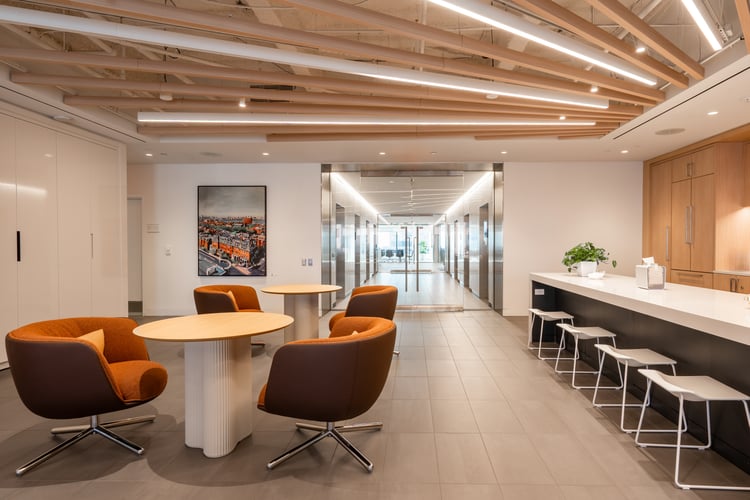
The workplace is one of the most visible expressions of an organization’s culture and brand identity. Employees are consistently able to accurately infer an organization’s values from images of its workspace (Bacevice & Larson, 2023), indicating the significant role of workplace design in shaping how employees understand an organization’s culture, priorities, and values.
Because employees derive meaning from their surroundings, design decisions also influence whether they feel represented and valued within the workplace. Incorporating artwork and design elements that reflect local culture and community signals an investment in employees’ lived experiences and shapes environments that feel more welcoming and accessible. In turn, these spaces can bolster morale, promote engagement, and strengthen employees’ connection to their workplace and organization (Nair & Hegde, 2026).
These employee outcomes also translate into business outcomes. Stantec’s 2025 Workplace Strategy Report recognizes feelings of belonging and strong company culture as foundational drivers of business health, linking them to higher employee satisfaction and retention, and these metrics directly contribute to productivity and financial outcomes. Furthermore, research also shows that organizations with clearly defined brand identities experience stronger customer engagement and increased revenue (Onalaja & Otokiti, 2021).
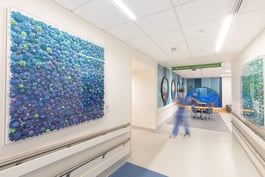
Intentional workplace art programs help organizations intentionally express their culture through the built environment. By translating organizational values into the physical environment, art transforms the workplace into an active reflection of company culture and brand identity. In doing so, it strengthens employees' connection to the organization while reinforcing a more consistent organizational identity for employees and a stronger brand experience for clients, visitors, and prospective talent.
The Impact of Workplace Design on Performance
Workplace design shapes both employee satisfaction and performance outcomes. While uninspired workspaces can leave employees feeling disconnected from their daily work, goals, and organizations, the office aesthetics, spatial flexibility, and employees' sense of connection to their workplace are among the strongest predictors of workplace satisfaction (Krizmanić & Milovanović, 2025). This highlights how the conditions of the workplace directly shape how employees collaborate, engage with their work, and connect with their organization.
Corporate art programs are data-backed, scalable strategies for creating an optimized work environment. A case study on Deutsche Bank’s art collection found that exhibiting art in the workplace was associated with higher employee motivation, increased job satisfaction, and a stronger sense of community and inclusion (Dellavedova, 2023).
The value of these outcomes is not always captured in a single metric. Instead, it emerges through their combined effect on employee behavior: motivation influences how employees approach their work, engagement shapes collaboration and participation, and retention determines whether organizational knowledge, culture, and relationships are sustained over time. 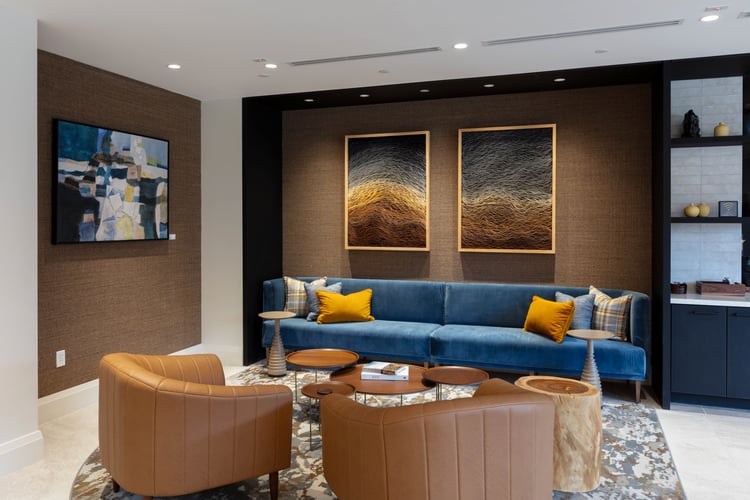
Psychological Wellbeing & Art Programming
The psychological case for workplace art is increasingly well-documented. A 2026 review on the psychological impacts of art in the workplace identified four principal domains where exposure to visual art can influence employee experience:
-
Psychological Wellbeing: Improved physical and psychological comfort, increased psychological stimulation.
- Psychological Distress: Significant reductions in stress and anger.
- Interpersonal Outcomes: Greater social interaction, defined as opportunities for sharing, dialogue, and the development of community.
- Work-related Outcomes: Greater efficiency and satisfaction (Cooper & Peristeri, 2026).
Emerging research builds on these findings by examining how specific design strategies influence these psychological processes. A 2025 study on immersive wellness strategies found that art and culture programming reflecting employee identities can reduce strain and encourage proactive health behaviors, particularly for working adults navigating high levels of workplace stress (Ke & Roadkasamsri, 2025).
These effects are partly explained by the activation of neural systems associated with emotional regulation and stress response when individuals engage with visual environments. Both passive and active engagement with art activates brain regions associated with emotional regulation. These neural systems are closely tied to how individuals process stress, interpret emotional stimuli, and regulate responses to their environment (Barnett & Vasiu, 2024).
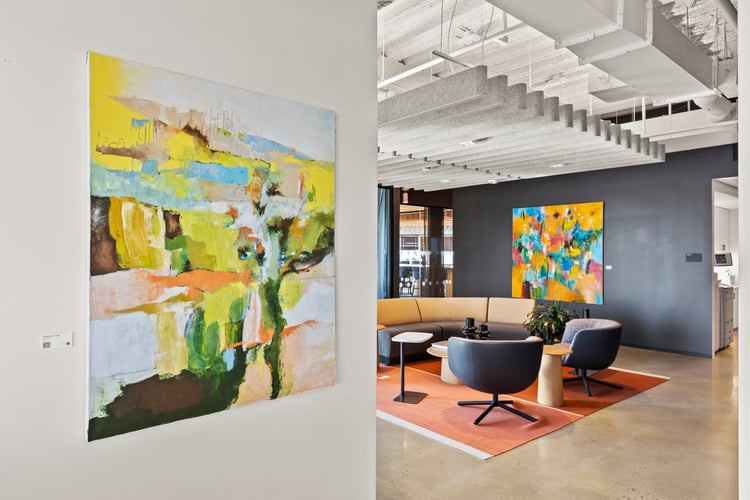
Workplace art is a powerful tool for fostering meaningful employee experiences, as it shapes the psychological conditions under which work takes place. These conditions help explain why visual environments are consistently linked to differences in well-being, engagement, and interpersonal connection in the workplace.
How TurningArt Can Help
At TurningArt, we help organizations translate their values into thoughtfully curated workplace art programs. Our Art Advisory team develops collections tailored to each client's culture, goals, and local community, creating workplaces that strengthen organizational identity while supporting employee wellbeing and engagement.
Connect with an Art Advisor below to learn more!

.jpg?width=332&height=177&name=_MG_0840%20copy%20(2).jpg)
.jpg?width=332&height=177&name=dtBv_067_DSC_2139_DaNil%20(2).jpg)
.jpg?width=332&height=177&name=0046-Interior%20(4).jpg)
.jpg?width=332&height=177&name=OraSeaport3_6%20(1).jpg)
