Keiichiro Muramatsu’s photographic practice exists somewhere between ikebana and poetry.
Inspired by the Japanese traditions of nageire flower arrangement and the spatial language of haiku, Muramatsu creates minimalist compositions that explore silence, perception, and the fleeting beauty of the natural world.
Tell us about your journey to becoming a professional artist.
My creative practice is built on two disciplines: photography and ikebana (Japanese
floral art).
My path in photography began with snapshots taken during my commute after graduating from university. That inspired me to join a photography club led by a local black-and-white photographer, where I learned how to move beyond recording moments and instead shape intentional snapshots into artistic stories. To continue strengthening my practice, I studied at a photography school in Vancouver, Canada, where I developed a stronger understanding of photographic technique and visual language. After returning to Japan, I worked at a portrait studio before deciding to work independently, opening my own photography studio in 2008.
My other discipline, ikebana (three-dimensional form), took form during my childhood when I was so deeply absorbed in LEGO blocks that my parents worried about the fascination. I believe this period nurtured an aptitude for expressing my inner world through three-dimensional form.
Later, I was deeply moved by the work of one of Japan’s leading flower artists, and since 2014, I have been studying ikebana in practice, continuing to refine my practice to this day.
My current practice connects my photographic skills and the act of gathering and arranging flowers through ikebana into a single flow, presenting them as finished works.
Was there a defining moment or a moment of clarity when you knew this was your path?
A defining moment of clarity–when I became certain this was my path–came while applying to study in Vancouver. I entered a photo contest hosted by a pet photography magazine and received an award. The jury chair was Elliot Erwitt, which drew me to the competition, and receiving that recognition from an established photographer I admired solidified my commitment to pursuing professional photography.
Tell us about your work. What themes or messages do you hope to convey through your art?
My arrangements are intended to invite moments of stillness and calm. I sometimes wonder if pausing in front of my floral arrangements during moments of conflict, taking a moment to internalize their quiet poetry, might soften feelings of tension.
Despite the turbulent times we live in, I believe beauty may still hold a power that connects people beyond words.
In an uncertain and fragmented world, I want to use flowers to create space for people to pause. In that shared stillness, a new kind of dialogue can emerge. We don’t often get to be silent together. I ultimately hope my practice might serve as a small refuge for someone, offering the often-overlooked opportunity for reflection.
At first, my work centered on the contrast between man-made and natural elements. I used industrial materials such as iron and aluminum as vessels, arranging grasses, flowers, and tree branches within them. Through the juxtaposition of hardness and softness, permanence and impermanence, I sought to express the fragility of nature. Arranging flowers has always been a way for me to understand the essence of nature itself, while inviting viewers to experience its quiet poetry.
In recent years, my focus has shifted toward understanding and appreciating silence. Drawing inspiration from Japanese haiku, I explore the relationship between a subject and its surrounding space, where the invisible and visible are of equal value. Specifically, the haiku concepts of kire (a cut or interruption) and ma (an interval or space) have become central to my photographic language.
A strong example is Bashō’s haiku, “Furuike ya.” The phrase “furuike ya” evokes the image of an old pond, with kire–the cutting word–“ya” creating a pause before the next line, “kawazu tobikomu,” which conveys a frog jumping into the pond. The final line, “mizu no oto,” refers to the sound of water, completing the image of the frog landing in the pond.
In my work, I see kire as the boundary where flowers meet water in the vessel. That interruption activates the viewer’s imagination, while ma is represented by the silence where perception and reflection unfold.
Tell us about your process. Do you have any unique techniques or rituals that are integral to your work?
I begin my process by gathering flowers, grasses, and branches in Japan’s rural landscapes and mountains. This act of gathering is an essential stage during which I engage with nature and deepen my understanding of the connection between flowers and poetry. Since 2014, I’ve been studying nagiere ikebana, a form in which the composition is not predetermined. Instead, each stem is placed individually, while remaining attentive and responsive to natural yin and yang harmonies.
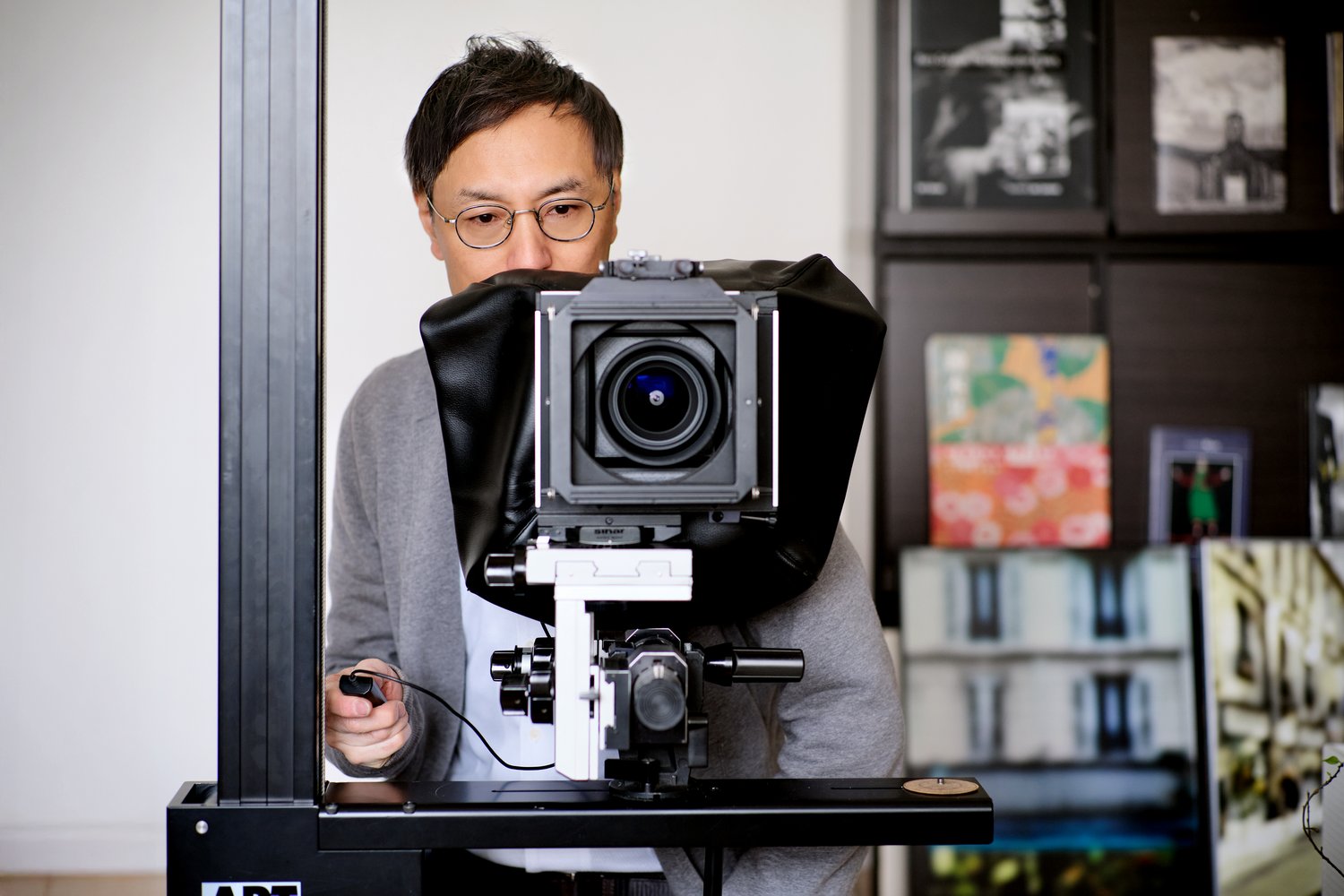
When photographing these arrangements, I mount a 100-megapixel-class digital camera to a 4×5 large-format camera, using the movements of the large-format camera to replicate natural human vision and perception. I do this to avoid my ikebana feeling like the sole subject in the image, as I want to create an image in which the flowers and the surrounding space carry equal value. I photograph the arrangements against a white background, using backlighting and fine adjustments to activate the perception of kire and ma.
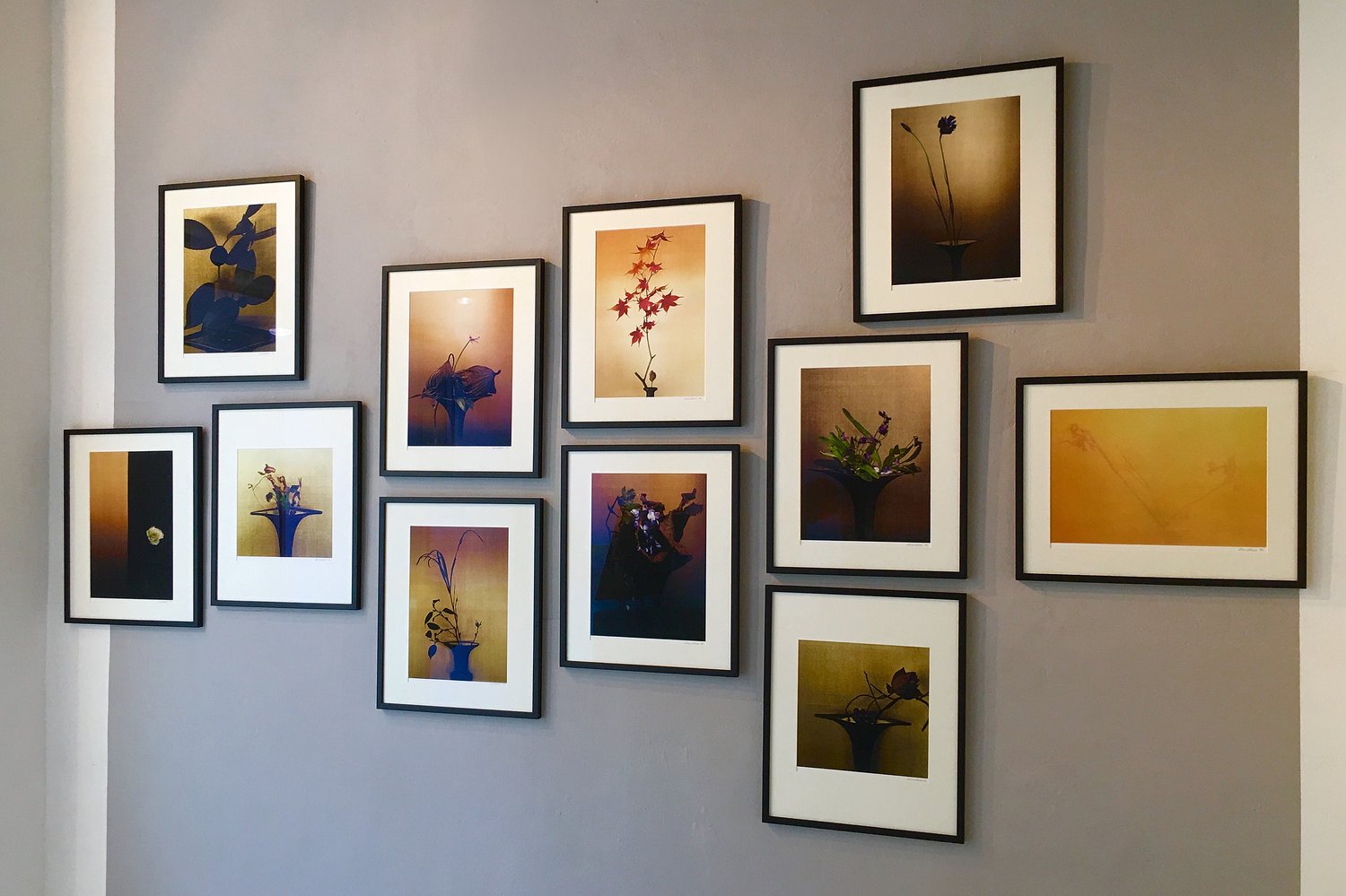
Finally, I convert the image into a digital negative on paper and finish it in the darkroom as a silver-gelatin contact print. For color prints, I apply a plaster-based ink-receiving coating onto washi paper and produce pigment inkjet prints.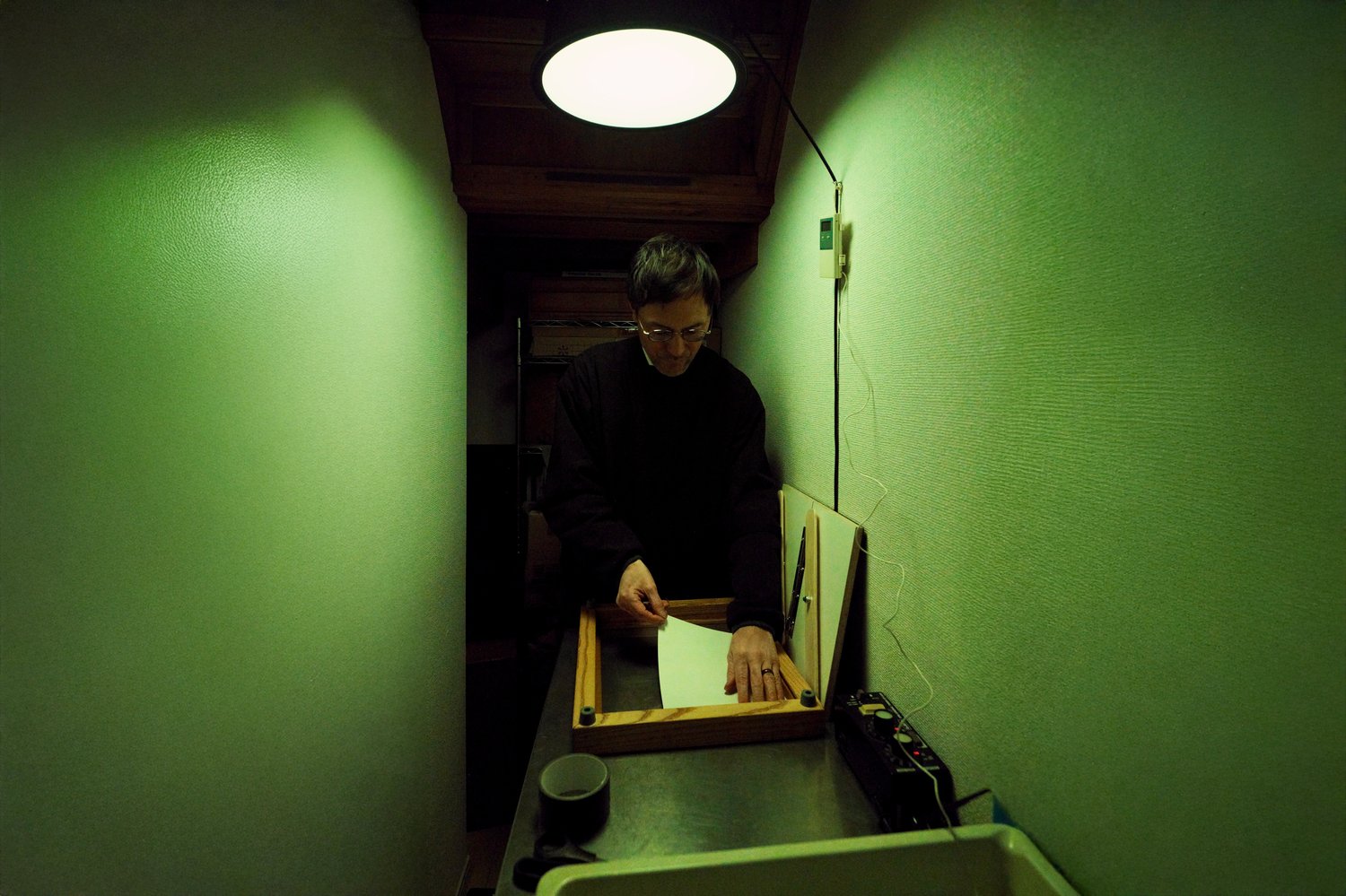
When you are looking for inspiration, what resources do you turn to? Are there any particular experiences, places, or people that influence your creativity?
I’m based and live in Shizuoka Prefecture, and I spend time traveling through Japan’s mountains and rural landscapes. I always value the times I encounter flowers, grasses, and branches. The direction of the light, temperature, humidity, the feel of the ground underfoot, altitude, the strength of the wind, and the subtle signs of seasonal transitions are the delicate shifts in the environment that determine the direction of my work. By placing myself within nature, I encounter presences that I experience as “poetry.” Those experiences, and the preciousness of nature itself, are the source of my creativity.
Finding the right rhythm to be productive can be a challenge. What advice do you have for staying productive and focused as an artist?
To stay productive, I make sure to dedicate one day each week to gathering flowers. Naturally, the two days after my gathering day become my photography days, usually from 11:00 a.m. to 2:00 p.m, because it’s the period when I can get suitable light for photographing. I tend to concentrate my photo-taking during that time, since natural light coming in through the window is limited.
Also, on the day before a shoot, I think about what I’ll arrange. There’s a sense of responsibility that comes with giving life to the living grasses, branches, and flowers I have gathered, and that responsibility helps sustain my focus. Also, since printmaking requires a solid time commitment, when I don’t have enough, I’ll instead test prints, prepare data, or make the paper for my inkjet prints. I make it a habit to complete something small every time.
What is your advice for combating creative blocks? Are there any specific strategies you use to reignite your creativity?
One concrete method that helps me is regularly participating in practical ikebana (nageire) classes. About fifteen students gather from around Japan for these classes, and each person brings grasses and flowers from their own region. Simply being able to encounter the forms, varieties, and seasonal differences of plants that I could never see on my own continually refreshes my senses.
Moreover, the act of arranging flowers is a time to face questions, like a Zen kōan.1 To keep facing those questions is, for me, the most reliable way to deal with creative blocks.
1. A story, dialogue, or question meant to be lengthily examined and dissected in the hope of reaching enlightenment.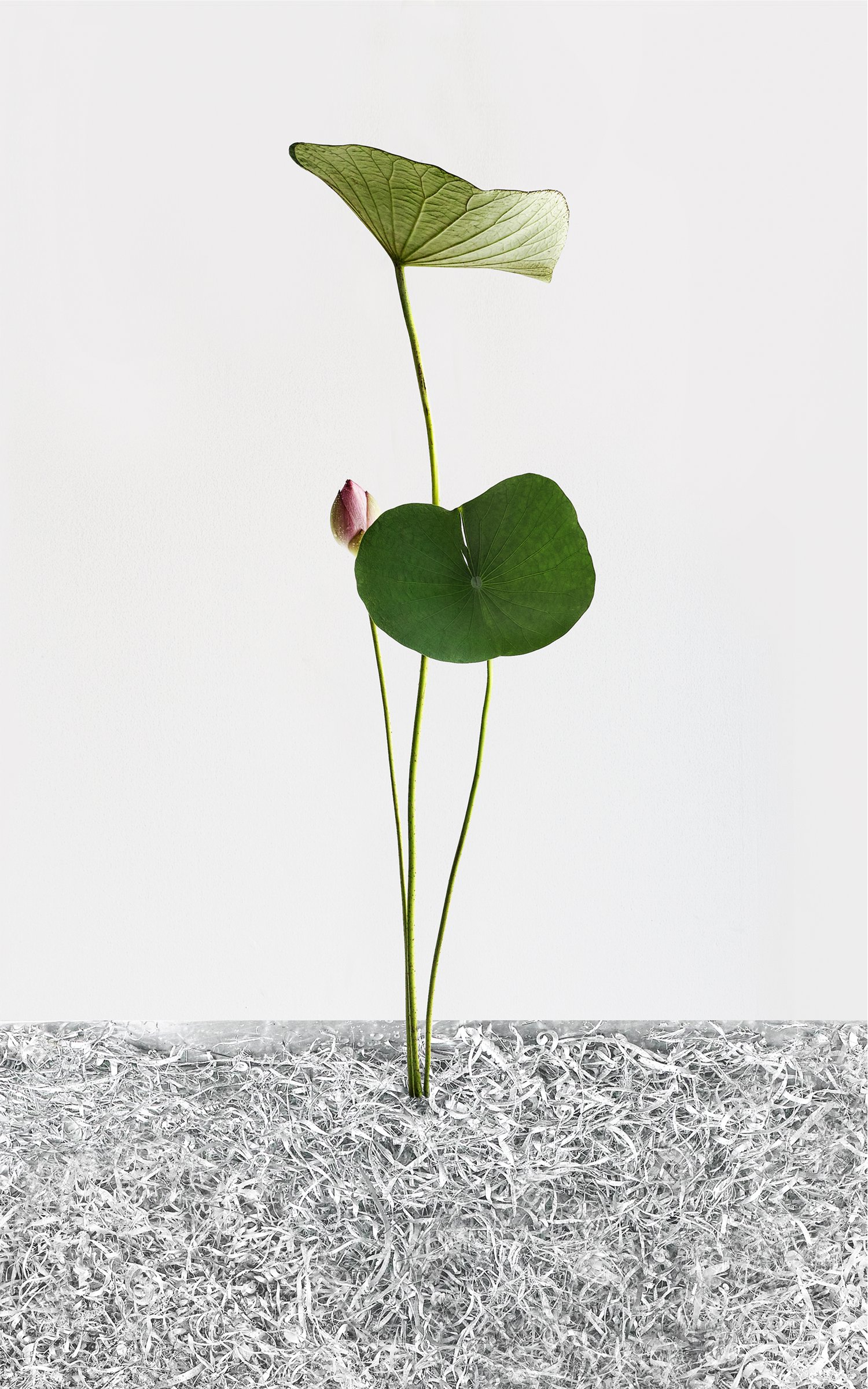
As an artist, how do you measure your success? Can you recall a specific event or milestone in your career that made you feel successful?
A major milestone that made me feel “successful” was holding a solo exhibition at a Parisian gallery in 2015. It was the first time I presented works made by arranging flowers, and it was through that exhibition that I was recognized as a minimalist artist working with flowers. Most importantly, it gave me a place where I could continue presenting my work consistently and became a solid foundation for everything that followed.
What advice do you have for artists who are beginning to build their careers?
My advice for artists who are beginning to build their careers is to find your subject and continue to develop it consistently. It can take time for curators and galleries to recognize a coherent theme in your pieces. In my experience, it is not unusual for it to take about five years of continuous presentations before the themes of your work are accepted. That is why I believe it is important not to rush results, but to keep creating in a way that’s true to your artistic voice.
It is also important to be objectively aware of where your work is positioned within the lineage of photography and art. Because of the relatively graphic character of my photographs, they are not appreciated solely within a photography-specific context, but also by minimalist galleries that engage with mediums like sculpture and painting. By discerning where your work should be seen, the people you encounter will also change.
Have there been any habits or strategies that you have adopted that you feel have created more opportunities or visibility for your work?
I always do research before I begin making new work. I previously worked at a patent office, so when a new idea comes to me, I check whether similar expressions or attempts already exist, much like searching prior art in patent literature. Just like in research and development, there are always multiple artists working on the same questions at the same time.
To clarify my position and avoid becoming self-referential, I regularly submit my work to photo competitions and open calls. I believe that receiving an objective assessment from a third-party jury is not only an opportunity to test my expression, but something that builds credibility as an artist and reassures collectors that both the work and the artist have been recognized.
At the same time, I believe it’s important that through submissions and results, work is shared more widely and remains as a public record. Increasing visibility is not only about gaining more exposure; it’s also about work accumulating in a form that can be referenced within society.
Do you consider yourself, and all artists, to be entrepreneurs? Why or why not?
In many ways, I believe artists are entrepreneurs. This is because an artist must not only create work, but also take responsibility for how it is presented in society, who it encounters, and the sustainability of its practice. Even the acts of time management, thinking through pricing and editions, finding venues for presentation, and developing a sustainable practice are, in my opinion, deeply entrepreneurial.
Failure is an inevitable part of success in any field. Do you have advice for overcoming setbacks and staying resilient in the face of challenges?
Making art can be solitary, and setbacks can sometimes place a heavy burden on the heart, which is why I set deadlines for myself. Staying aware that time is finite helps me maintain resilience by continuing to work toward a goal.
Open calls and competitions have a clear submission deadline, and that shapes the rhythm of my practice. Furthermore, because I work with flowers, if I miss the season or timing of a bloom, I’ll have to wait until the next year. Creating within the natural flow of the seasons’ cycle gives me the strength to keep moving forward each day.
What sparked your interest in partnering with TurningArt? Has your experience with TurningArt differed from other art companies you have worked with?
What initially drew me to TurningArt was the art rental program. I was inspired by the idea that the work can be experienced in real spaces, not only collected, and that it can create more opportunities for people to encounter it.
I hope to have my work displayed in environments like hospitals and hotels, in places that people stay for a period of time, and where a space can support calm and reflection.
Additionally, since I live in Japan, it is a major advantage to have print capabilities in the United States. It allows me to deliver work to spaces in the U.S. while reducing the practical burdens of production and international shipping, which feels especially valuable in today’s circumstances.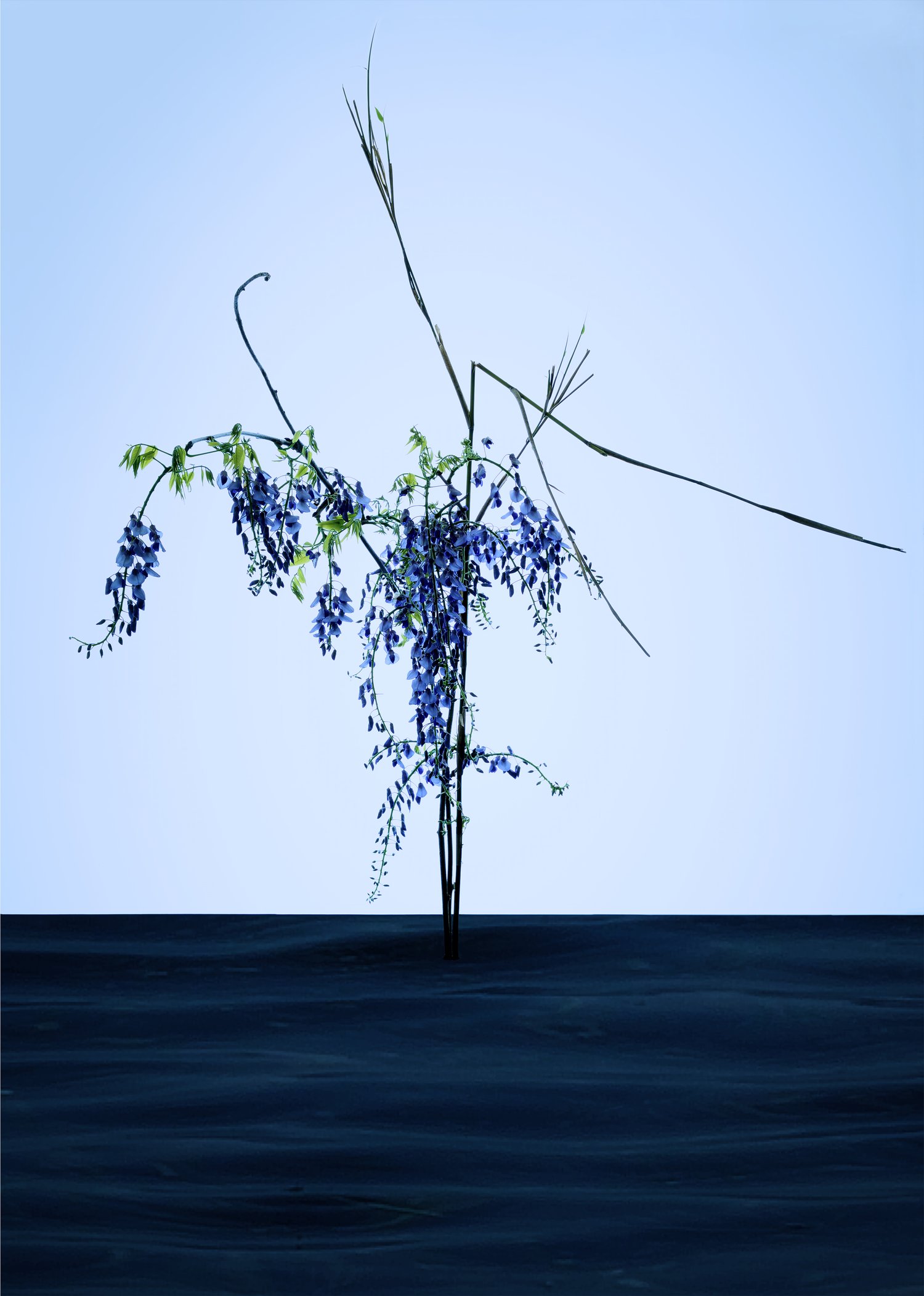
What does having your artwork in public spaces mean to you? How does it feel to see your art in environments where people can engage with it daily?
A collector who purchased my work once told me, “I hung up your piece in my entryway, and seeing it when I leave and return helps me shift my state of mind.” Knowing that my work can have a small positive impact on someone’s day has been deeply encouraging for me.
In public spaces, unlike galleries or museums, people are there for reasons other than viewing art. Encountering an artwork by chance—and pausing even for a few seconds—feels incredibly meaningful to me. Because it is not a moment of intentional “viewing,” but rather an encounter that occurs naturally, I believe a quiet sense of stillness these moments can evoke is even more powerful.
Additionally, I don’t only think of the framed work itself, but of the entire wall it hangs on as a singular “art space.” I am deeply interested in making works that can quietly refine the atmosphere and dignity of the environment in which they are placed.
Was there ever a moment of clarity about being an artist? Can you share an anecdote relating to your journey or realization of being an artist?
Solo gallery exhibitions, submitting art to open calls, and selling work may be objective evidence of being an artist, but the development of my personal identity as an artist stems from something entirely different.
During my graduation interview at photography school in Canada, I declared in front of my professors, “From here on, I will live as an artist who presents my work.” Before listing achievements, I spoke those words and took responsibility for that path. At that moment, my commitment became real.
How does being an artist affect your perception of the world? Do you see things differently compared to others who might not have an artistic background?
When I first began creating photographic work, I once heard the phrase, “An artist can become a craftsman, but a craftsman cannot become an artist.” I deeply respect craftsmanship, and I don’t know if I fully agree with this saying. Still, I feel that this kind of “one-way” relationship is connected to the loneliness of being an artist.
Creating is deeply personal; it’s not something done by instruction. And yet, strangely, when something created in solitude touches another person’s heart, it creates a shared sense of empathy. My experience as an artist is informed by this dual sensation of loneliness and connection, somehow simultaneously interwoven and disconnected.
Have other artists inspired your path? If so, can you share how they have influenced your work or career?
My path was not inspired by any single individual artist, but instead by the questions that great photographers, ikebana masters, and minimalists have left behind.
My artistic process is a continuation of the work left behind by my predecessors. The history of photography as a medium, minimalist thinking, and the practice of ikebana have each formed their own set of questions that I test with my own hands. If anything, the journey feels like mountaineering: I follow the footsteps of those who came before me, using their guidance to reach the summit and appreciate the view, before heading off toward the next mountain.
My current challenge is to incorporate the haiku concepts of empty space (ma) and the cut (kire) into my photographic practice, in order to maximize the viewer’s perception and appreciation of my work.
What is most meaningful to you about being an artist? What drives you to continue creating and pursuing art?
Above all, what drives me to continue making work is the way my senses are renewed each time I place myself in nature and encounter flowers, grasses, and branches. With every shift of season and light, and every reminder of life’s fragility, I am made to feel that there is still something I have not yet seen, and I keep seeking new encounters.
In addition, a sense of responsibility: to honor the living flowers I have gathered, give them form, and preserve that moment as a photograph, continues to move me forward. I hope that my ongoing questions might one day become one small step in the path that future artists will tread.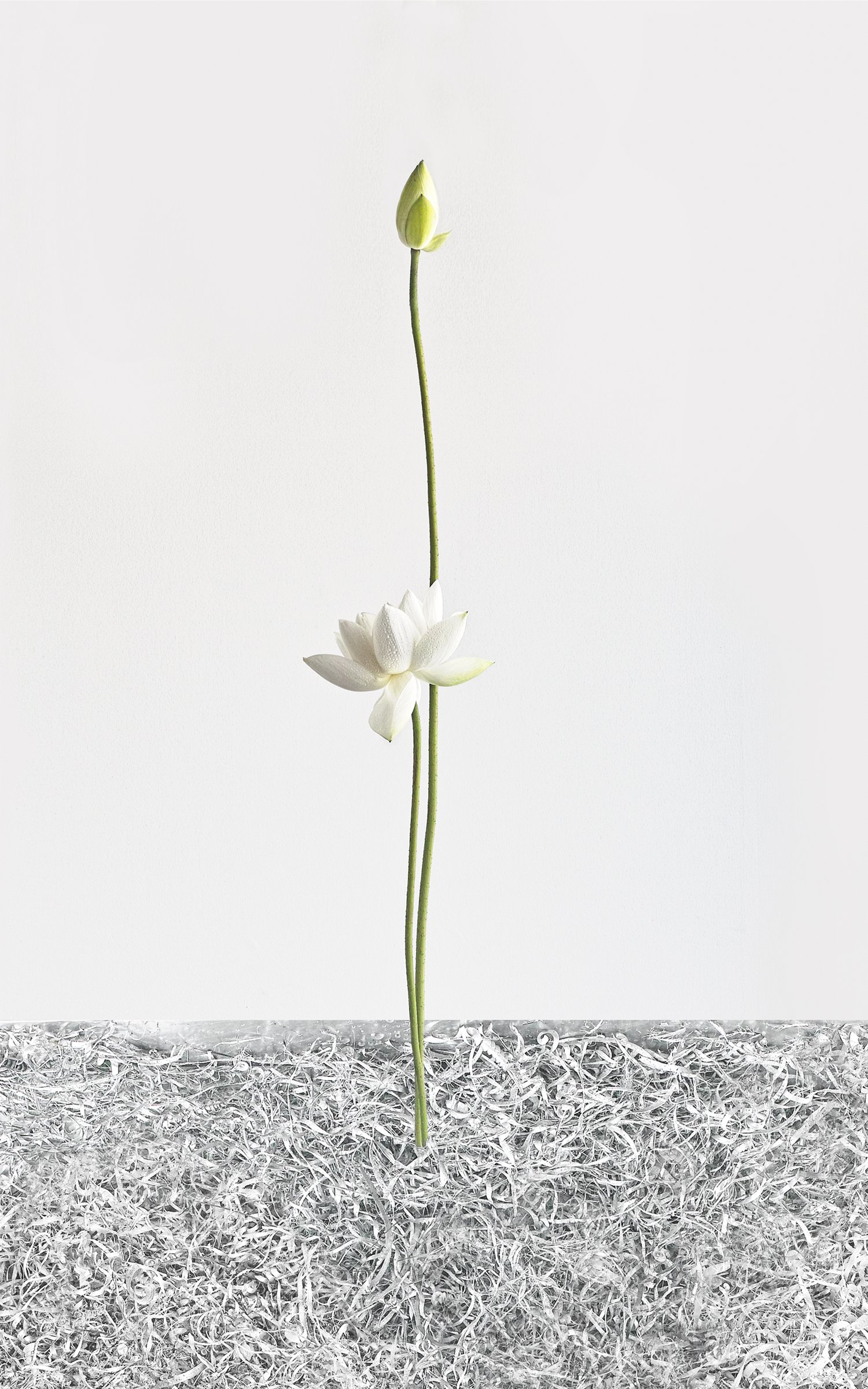
To see more featured TurningArtists, return to our blog. To get Keiichiro Muramatsu's art in your space, set up a free consultation with an Art Advisor here!