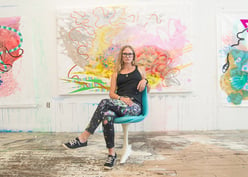
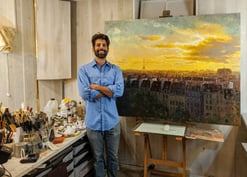
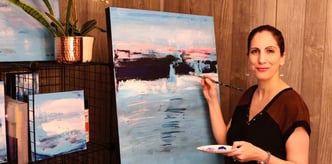
Boston-based contemporary painter Nedret Andre is deeply inspired by the fluid motion and ecological resilience of underwater eelgrass meadows.
Nedret stays involved with research and activism in marine biology to most effectively translate the rhythmic life of seagrass ecosystems into vibrant landscapes that remind us of the magnificence and fragility found just beneath the ocean's surface.
Tell us about your work. What themes or messages do you hope to convey through your art?
My work is rooted in the resilience and movement of seagrass ecosystems. Through layered color, shifting density, and rhythmic mark-making, I translate the fluid motion of eelgrass meadows into abstract visual form. As an environmental artist engaged directly with marine restoration initiatives and coastal conservation organizations, my practice bridges ecological research and contemporary abstraction.
Seagrass meadows are among Earth's most critical yet overlooked ecosystems; they serve as carbon sinks, nurseries for marine life, and indicators of environmental health. Rather than literal representation, my work communicates the rhythm, movement, and resilience of these ecosystems, reminding viewers to celebrate nature's magnificence and consider the important conversations surrounding its increasing fragility.
My abstracted landscapes are vibrant interpretations of these endangered marine systems. I collaborate with marine biologists and participate in quarterly seagrass research meetings, where emerging scientific findings inform my visual translations of ecological processes. I also volunteer annually with East Coast conservation organizations, contributing to eelgrass restoration and community education initiatives. While I allow quietness and spatial tension to shape each composition in the studio, these experiences immerse me in the subject matter, adding a raw and honest element of reality to my work.
Tell us about your process. Do you have any unique techniques or rituals that are integral to your work?
My process is very organic and fluid. Each canvas begins as a watercolor painting that I build upon using free-flowing diluted oils and intersecting acrylic markings. Starting like this allows me to remain open to discovery, exploring unusual shapes and colors in every piece.
As a process painter, color and composition come first on the canvas. The connection to science evolves naturally. I might be reading a scientific paper or reviewing notes from a past meeting, and suddenly I feel a connection to one of my paintings—oh, this is about carbon sequestration—and it all makes sense.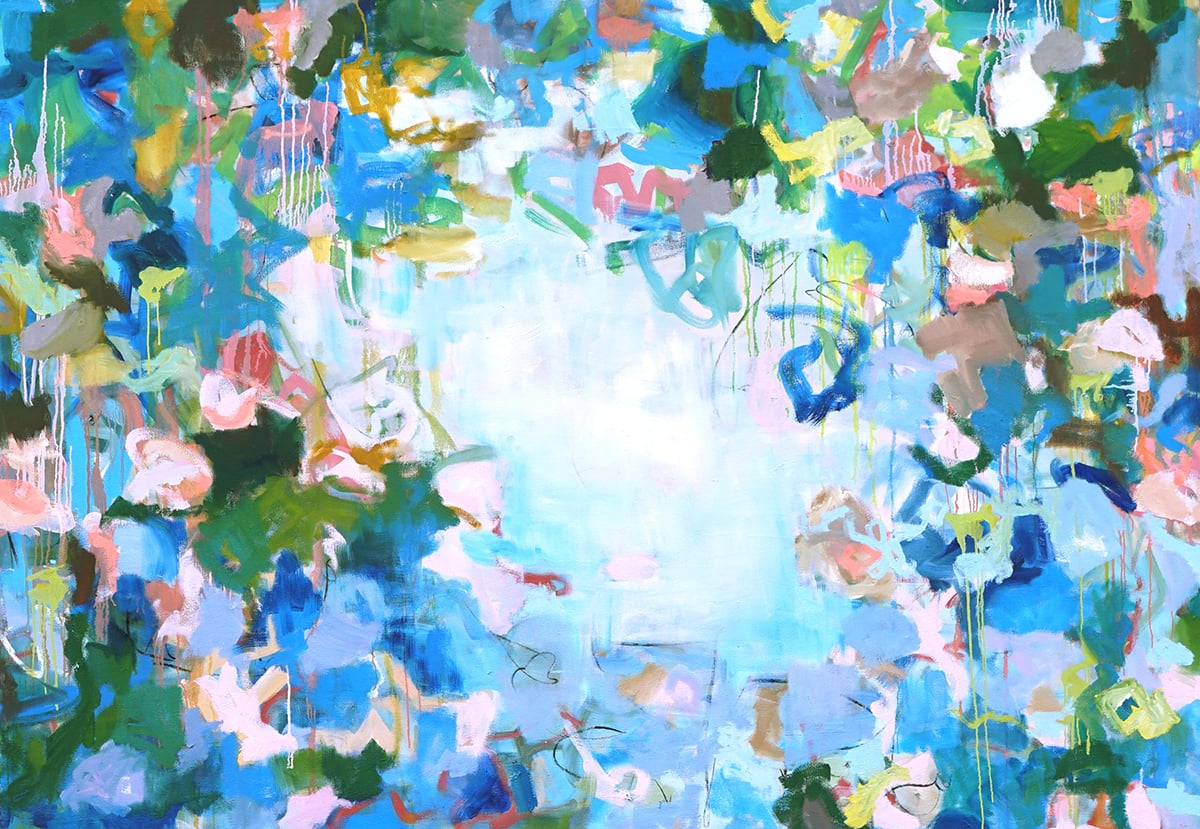
Tell us about your journey to becoming a professional artist. Was there a defining moment or a moment of clarity when you knew this was your path?
My debut solo exhibition in Boston in 1996 marked a pivotal moment in my career and helped me realize the potential of visual storytelling. My work involved recycled paint chip collages, and it was the first time I presented a cohesive body of work exploring life cycles and identity. How amazing is it that a pile of colorful paint chips could represent greater messages about life?
Though my experience pursuing a B.A. and M.F.A. in Fine Arts shaped my practical skills, I also learned you cannot survive as a painter without conviction and a prolific practice. I believe we're all born artists, and it's what we focus on that grows. Any kind of hands-on learning, like wheel throwing or making a pinhole camera, is what helps to build the scaffolding for your own artistic journey.
That exploration is what I loved most about art school. I tried so many different mediums, had countless failed experiments (still do!), and cherished the community aspect. I found infinite value in the brainstorming, the immersion in art history, and, of course, figuring out what I was passionate about.
Finding the right rhythm to be productive can be a challenge. What advice do you have for staying productive and focused as an artist?
I maintain a rigorous studio practice and work on multiple projects simultaneously. This approach helps me sustain momentum and shift between pieces as needed. Discipline is what creates the space for discovery.
Outside of the studio, I find that taking time for meditation is essential. I always feel grounded by physical movement, so by walking, running, and practicing yoga, I return to my work in a state of receptivity. I've learned to stay alert to the artistry and design of the natural world: the particular shade of sage on a winter walk, or a mushroom's unexpected geometry. These observations develop into the visual vocabulary that my practice communicates.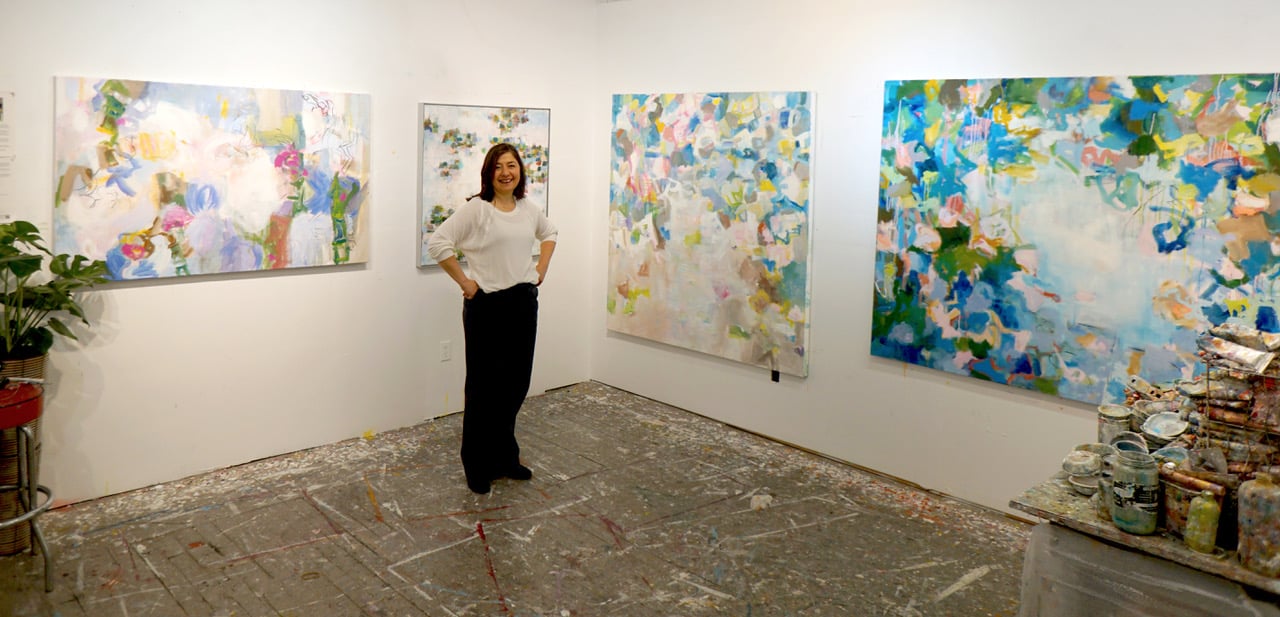
What is your advice for combating creative blocks? Are there any specific strategies you use to reignite your creativity?
The words "creative blocks" sound fun, like large cubes you could climb up and look around!
If my studio practice is ever feeling too rigid, I try to take a break and switch gears. For example, I might find new ways to explore color, such as gathering swatches, making collages, attending exhibitions, or reading. Travel also allows for different types of observations. I believe creativity is about remaining present and allowing beauty to emerge throughout daily experiences.
By anchoring my daily routine in movement and meditation, I’m able to activate the flow states essential for creation. I have come to trust this organic rhythm, recognizing that creative blocks are often invitations to pause, climb up those large cubes, observe, and gather. The work that emerges after these periods of quiet often carries an unexpected depth.
As an artist, how do you measure your success? Can you recall a specific event or milestone in your career that made you feel successful?
I’ve found that success has several different layers. Of course, museum exhibitions and corporate commissions represent important professional milestones, but the most meaningful metric to me is the impact my work has on its audience. Sometimes visitors return to my studio and describe feelings of transformation, contemplation, and joy associated with experiencing my work again. That's the power of color and form activating space and consciousness.
My collaboration with the scientific community is equally important in how I view myself as an artist. My purpose is deeply rooted at the intersection of art and science; I’m able to contribute visual thinking to ecological discussions and help researchers communicate complex data through imagery.
I believe that art should exist in the world, not just within gallery walls. I make an effort to exhibit both at prestigious institutions and accessible public venues to ensure my work reaches a diverse audience.
What does having your artwork in public spaces mean to you? How does it feel to see your art in environments where people can engage with it daily?
Having my art in corporate and public spaces is profoundly gratifying. These are spaces where people spend significant portions of their lives, and art can actively contribute to a more engaging environment. I feel that my work is fulfilling its highest purpose if it sparks a moment of reflection, a shift in perspective, or simply adds beauty to someone's day.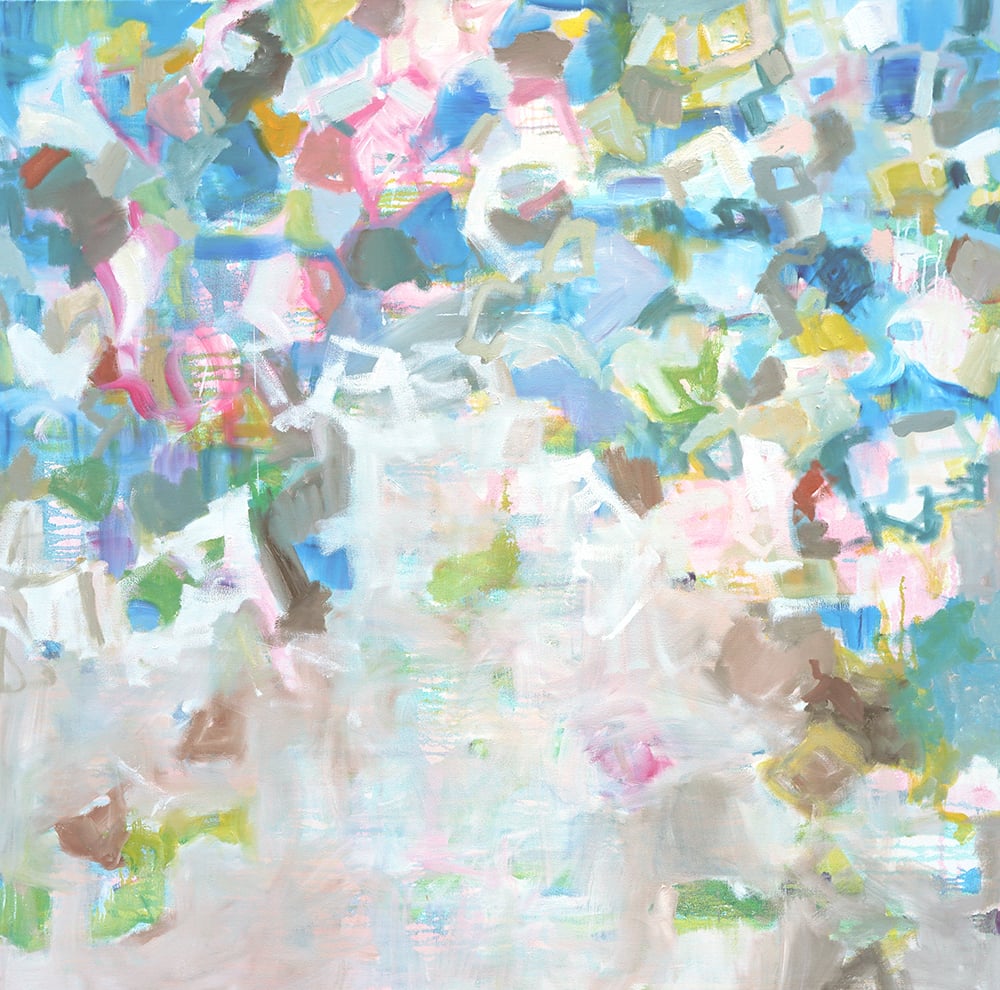
What sparked your interest in partnering with TurningArt? Has your experience with TurningArt differed from other art companies you have worked with?
I first encountered TurningArt's curation in Boston's Longwood neighborhood and was immediately impressed by their aesthetic discernment and the caliber of artists they represent. Since partnering with them, I've experienced their distinctly personal and professional approach. They understand how to position serious contemporary art in corporate environments. The TurningArt model makes museum-quality work more accessible while maintaining artistic integrity.
Have other artists inspired your path? If so, can you share how they have influenced your work or career?
I draw ongoing inspiration from Agnes Martin's meditative lines, Joan Mitchell's gestural color translations of natural environments, Jasper Johns's material innovation, Yayoi Kusama's hypnotic pattern work, and Cy Twombly's ability to make the monumental feel weightless. Each artist has taught me something essential about restraint, expression, materiality, or visual rhythm.
How does being an artist affect your perception of the world? Do you see things differently compared to others who might not have an artistic background?
To be an artist is to be a divergent thinker, trained to perceive patterns, structure, color relationships, and spatial dynamics differently than others. I find this skill particularly valuable during scientific meetings, as it allows me to visualize abstract data and enhances my understanding of spatial problems. I believe that artists have a heightened sensitivity to and empathy for the human experience.-1.jpg?width=1500&height=895&name=unnamed%20(1)-1.jpg)
What is most meaningful to you about being an artist? What drives you to continue creating and pursuing art?
Every painting session is an exploration of color. My brushes and canvas are companions on a lifelong journey of observing, understanding, and translating the world around me. That sustained sense of wonder drives my creative practice and is both a privilege and a responsibility.
What moves me most is how my work can connect to my audience. Even when the subject remains elusive to the viewer, they can sense the tranquility, the underlying energy, and the quiet rhythms of existence. That sense of intrigue mirrors how I feel in a seagrass meadow, immersed in the magnificent biodiversity of our oceans..png?width=1500&height=1909&name=Untitled%20design%20(5).png)
What advice do you have for artists who are beginning to build their careers? Have there been any habits or strategies that you have adopted that you feel have created more opportunities or visibility for your work?
Stop overanalyzing. Put work into the world. Find subject matter that generates genuine curiosity and joy. For me, that's seagrass: both a metaphor for resilience and an invitation to play. I find that opportunities emerge wherever we authentically devote our energy.
Artists are fiercely entrepreneurial in that they must be resilient, business-savvy, and goal-oriented. It’s vital to develop these capacities or find collaborators who can support you. It’s also important to understand and accept that setbacks are intrinsic to the process.
My approach? Do it anyway.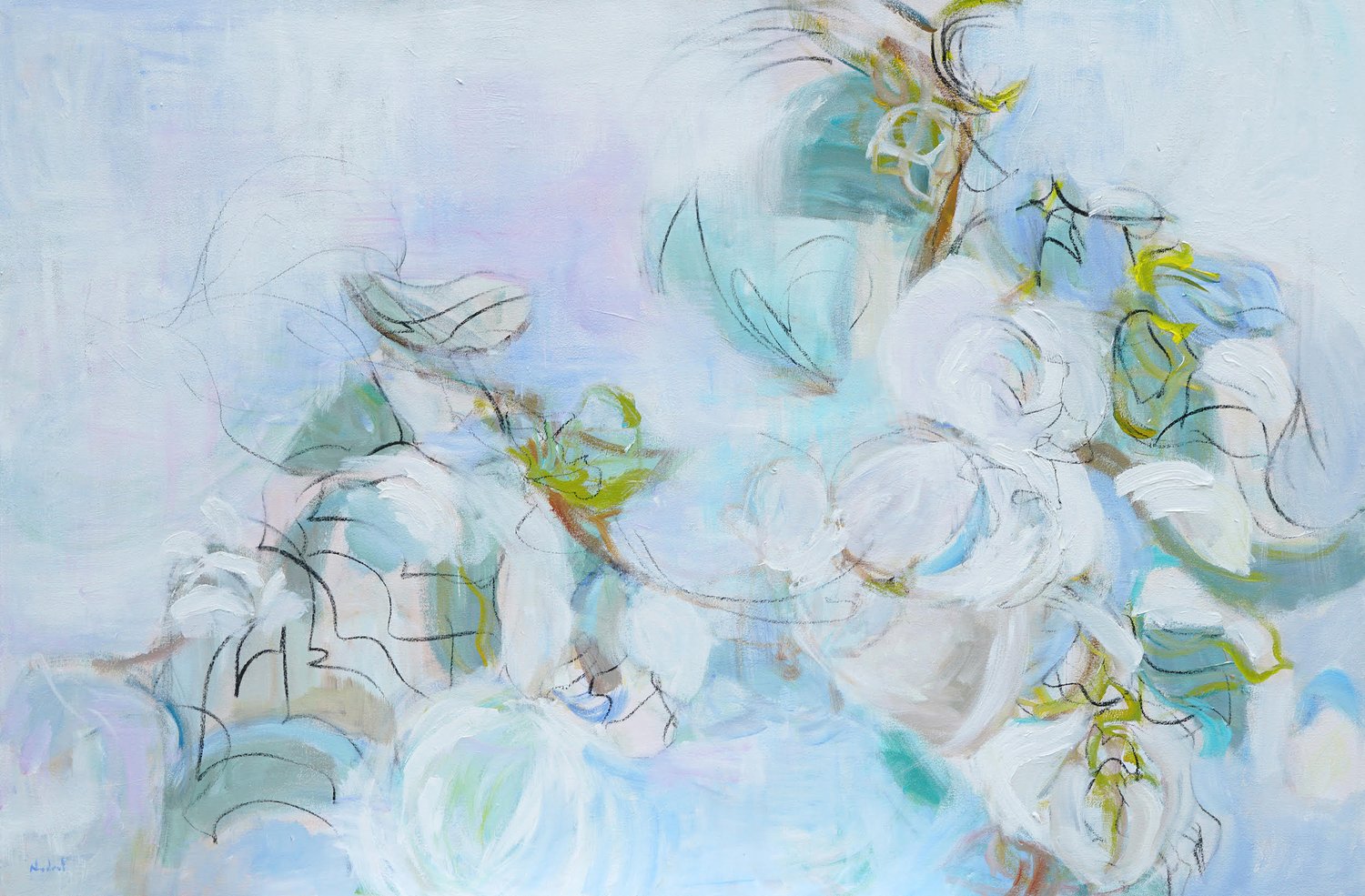
To see more featured TurningArtists, return to our blog. To get Nedret Andre's art in your space, set up a free consultation with an Art Advisor here!