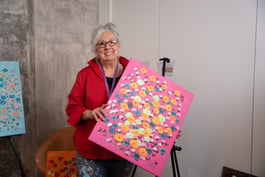
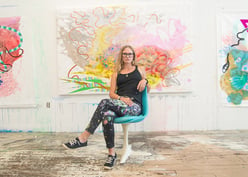
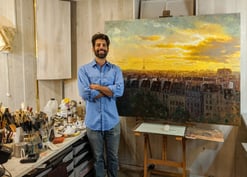
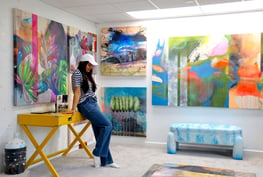
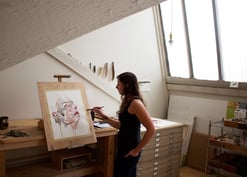
William O’Connor’s path to painting began at the Hollywood Bowl, where live classical and rock performances inspired a pursuit of fine art. Now an Abstract Expressionist based in Glendora, CA, O’Connor doesn’t paint without music.
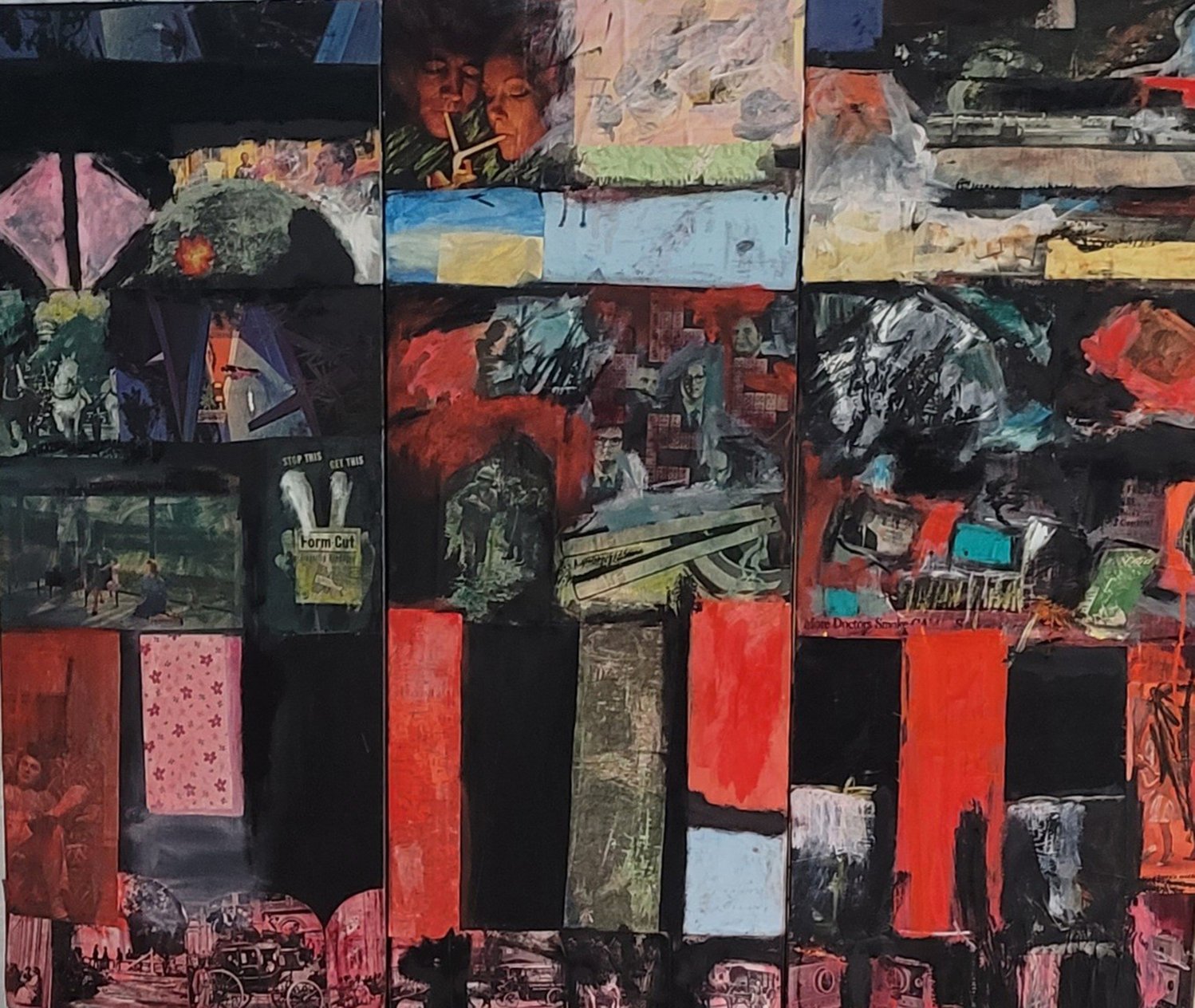
His work draws on Modernism and masters like Willem de Kooning and Richard Diebenkorn, expressed in vibrant color, invented shapes, and rich detail. His earlier paintings leaned on German Expressionism and representational figure work. Alongside his oil paintings, O’Connor has welded steel sculptures and built ceramic pieces for more than four decades.
Tell us about your journey to becoming a professional artist.
From 1975 to 1980, I worked year-round at the Hollywood Bowl for the LA Philharmonic and LA County. Being around live classical and rock performances, and the art world that surrounds them, is what truly inspired me to pursue fine art painting. I got to rub elbows with some interesting people.
Oil painting entered my life around the same time, and I credit the medium with bringing forth the artist within me. For several years, most Tuesday nights were spent at the “uninstructed” figure drawing studio of the late Sam Clayberger, the well-known Hanna-Barbera animator and artist.
I took classes at Otis Art Institute, Los Angeles Valley College, and Pasadena City College, studying printmaking, figure drawing, sculpture, art history, ceramics, and the other required fundamentals for a fine art background.
That said, I wanted to hold on to my own artistic expression and steer clear of academia, so I deliberately pieced together an eclectic path involving several different institutions and various professional artists. I also spent a great many afternoons studying and drawing from the masters' paintings at the Norton Simon Museum in Pasadena.
I wanted my practice to be as well-rounded as possible and never identifiable as a by-product of a particular art school.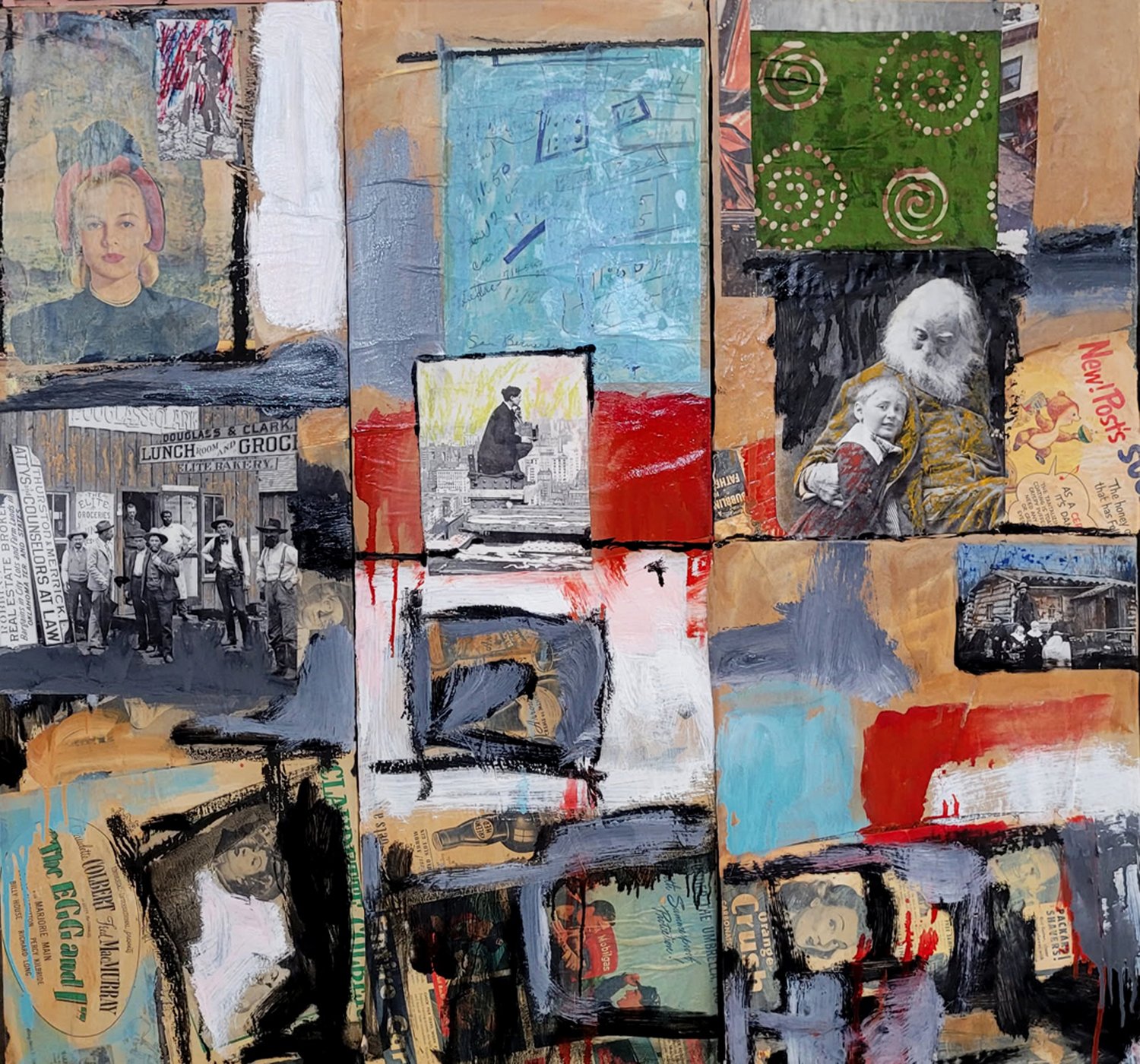
Tell us about your work.
For the last twenty years, my work has been primarily Abstract Expressionist. Before that, my paintings were heavily influenced by the German Expressionists and representational figure work.
Aside from oil painting, I’ve had the opportunity to explore other fields of creativity extensively. I have welded steel sculptures and constructed ceramic art pieces for over forty years. For a few decades, I was also a partner at Farrin O’Connor Design Studio in Pasadena, where we offered classes in metalsmithing and jewelry design.
Tell us about your process.
Like most artists, the process evolves in my mind, and a piece may remain in my imagination for days before any painting begins. I’ve always understood the value of good technique, materials, and skill.
I’ve also rejected the so-called “rules” that try to push me in a direction I don’t want to go.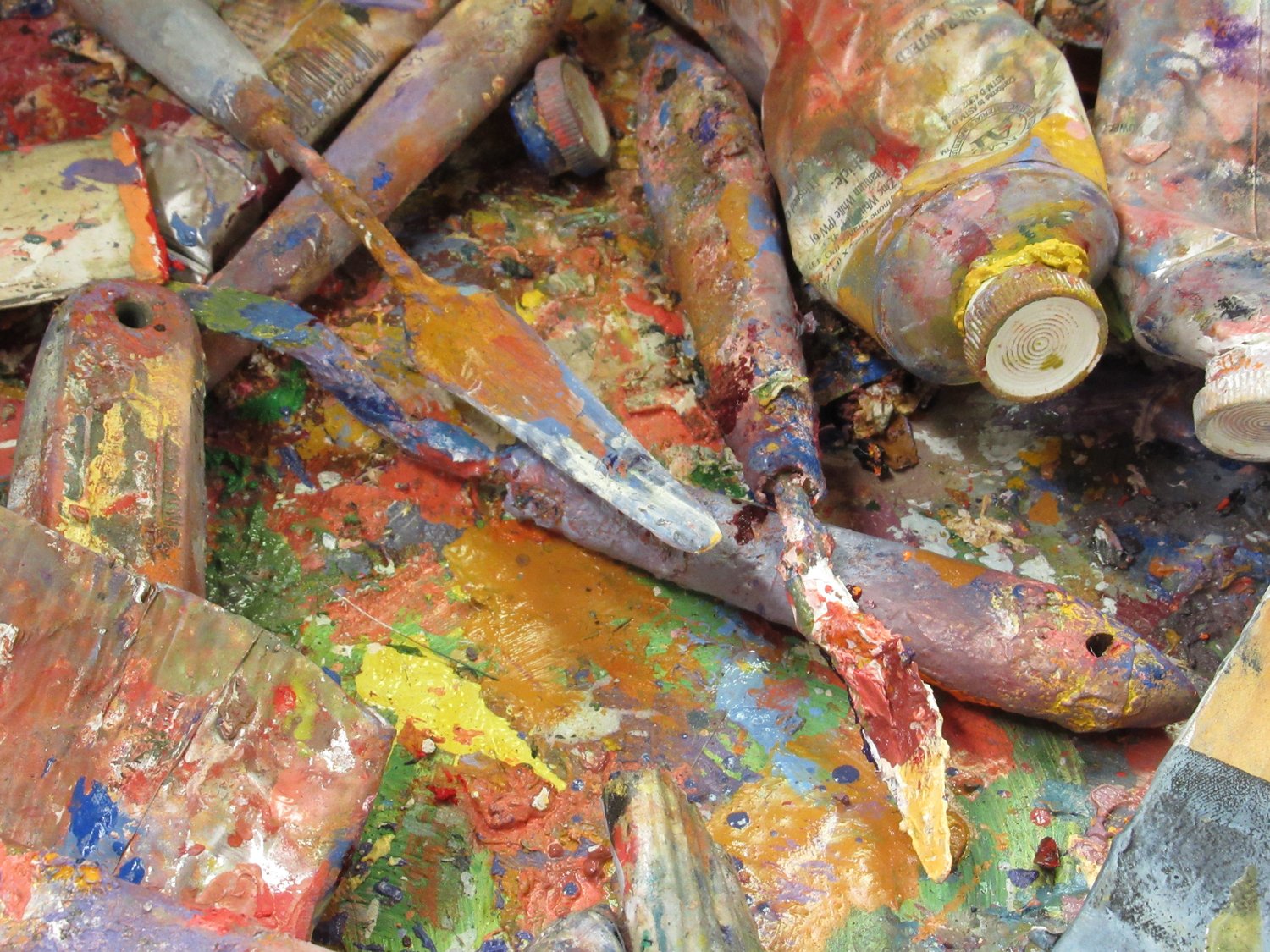
When you are looking for inspiration, what resources do you turn to?
Choosing an eclectic path gave me the chance to absorb the works of artists I admire and respect. Through developing lifelong relationships with painters, many of whom are no longer here, I’ve adopted the wisdom from their quotes and statements.
Mentally, and sometimes verbally, I invite the spirit of the masters to join me as I create. It’s a way of gathering their essence and influence, and then seeing how my work turns out.
What advice do you have for staying productive and focused as an artist?
I’m always working with the hope of finding a little “lightning in a bottle.” Staying humble and continuing to paint keeps me focused, and I try to get out of my own way and let the paint speak for itself.
Music is a big part of that. It instills all kinds of rhythm, and I don’t paint without it.
Thanks to those years at the Hollywood Bowl, my playlist swings between Rachmaninoff, Rimsky-Korsakov, Tchaikovsky, Smetana, and Mahler, and The Chambers Brothers, Iron Butterfly, Bob Seger, Emmylou Harris, Jackson Browne, The Moody Blues, Van Morrison, and Bob Dylan. Many of my pieces are titled or inspired by this music.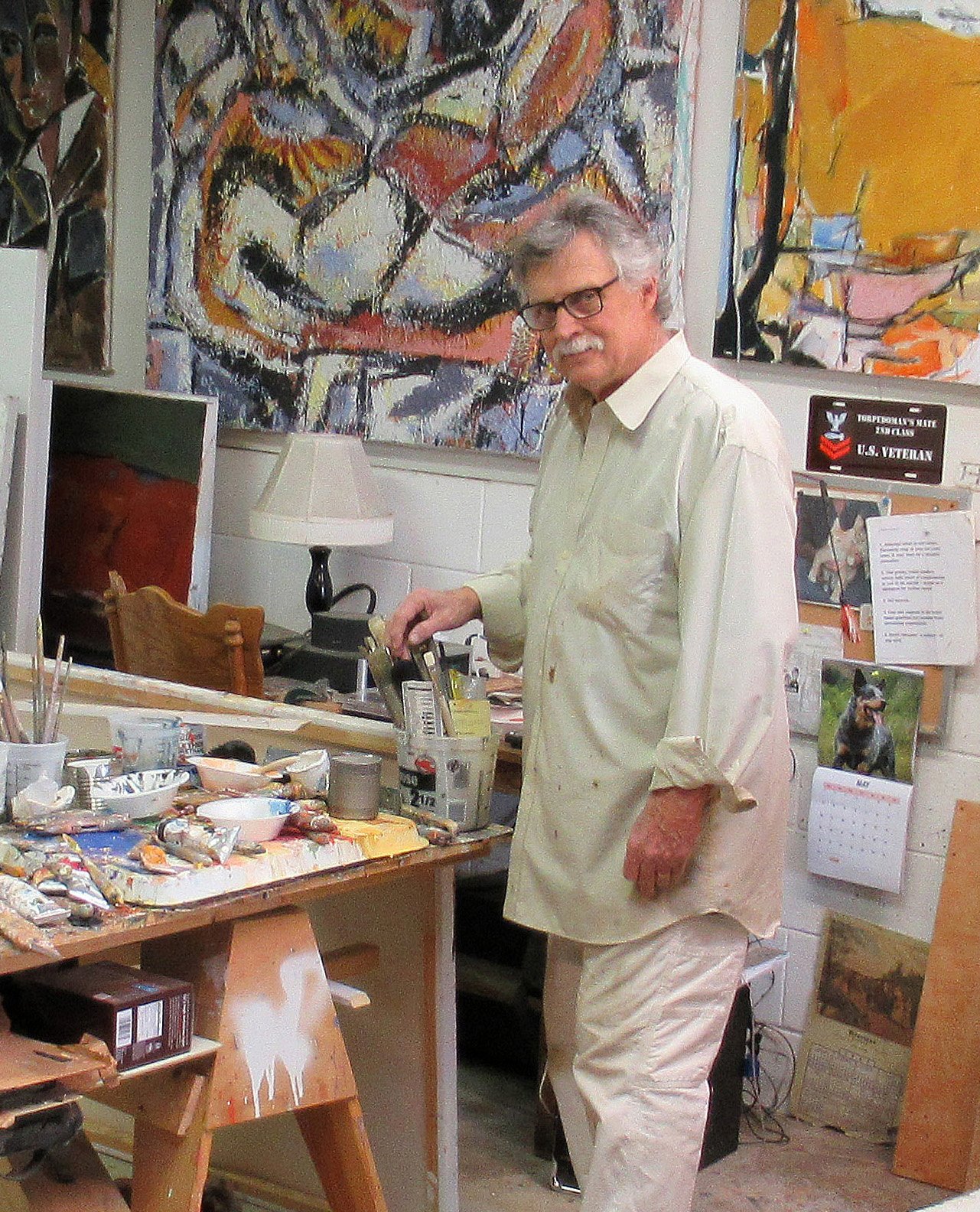
What is your advice for combating creative blocks?
Stop what you’re doing. Go outside and find a place to sit and just daydream. When you wake up in the morning, stay in bed, stare at the ceiling, and visualize.
I would also recommend reading a biography of an artist you admire and learning from the “genius” in their work. Biographies of Robert Rauschenberg, Georges Braque, Willem de Kooning, Edward Hopper, Jackson Pollock, Francis Bacon, and others have helped me continuously move forward in my work and imagination. I like to keep famous quotes from artists I respect where I can see them.
Find one of the greats that speaks to you, and live with them in your head.
As an artist, how do you measure your success?
I think I would replace the words “your success” with “what you achieve.”
One day I realized that all of the great artists I admire either did, or are doing, basically the same thing I do. We use similar techniques and materials, and though I don't expect to ever achieve their greatness, I do believe in my ability to keep trying to elevate my own work.
What advice do you have for artists who are beginning to build their careers?
Since creating art is such a personal experience, it’s easy to go from exhilarated one day, completely down the next, or stuck somewhere in between—all in the same week.
Be discerning about who you listen to and what advice you take. Try not to lose sight of what brought you to this point, and always believe in yourself and what you're doing, especially when things aren't going your way.
It also helps to remember that artists have been on this planet for more than 60,000 years. I'd suggest recognizing that kinship.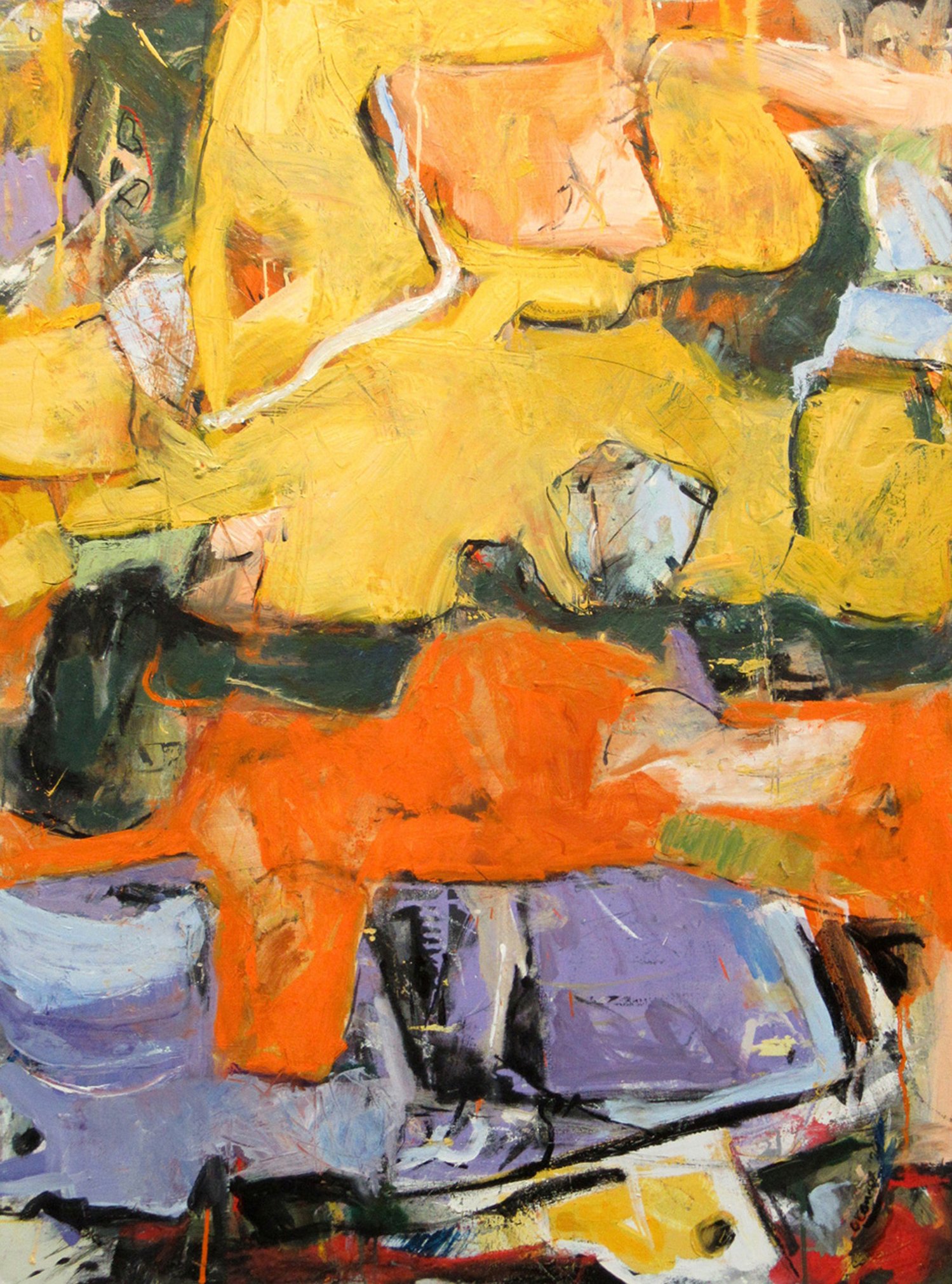
Do you have advice for overcoming setbacks and staying resilient in the face of challenges?
Personally, I don’t create space for conventional “failure” in my work. As Rauschenberg said, “I always have a good reason for taking something out, but never one for putting something in…”
It’s a liberating and powerful feeling to stop what you’re doing, paint over the entire piece, rotate the canvas, and start again. The artist is in charge.
If all else fails to lift your spirits, pet a cat or a dog.
What sparked your interest in partnering with TurningArt?
I was intrigued by TurningArt’s business approach, and I enjoy the exposure TurningArt has given to my artwork. The staff I’ve worked with are the best. I feel I can trust them and think of them as friends.
What does having your artwork in public spaces mean to you?
It provides exposure to my work for people who may have never seen it otherwise.
It’s a form of sharing, isn’t it? I enjoy that.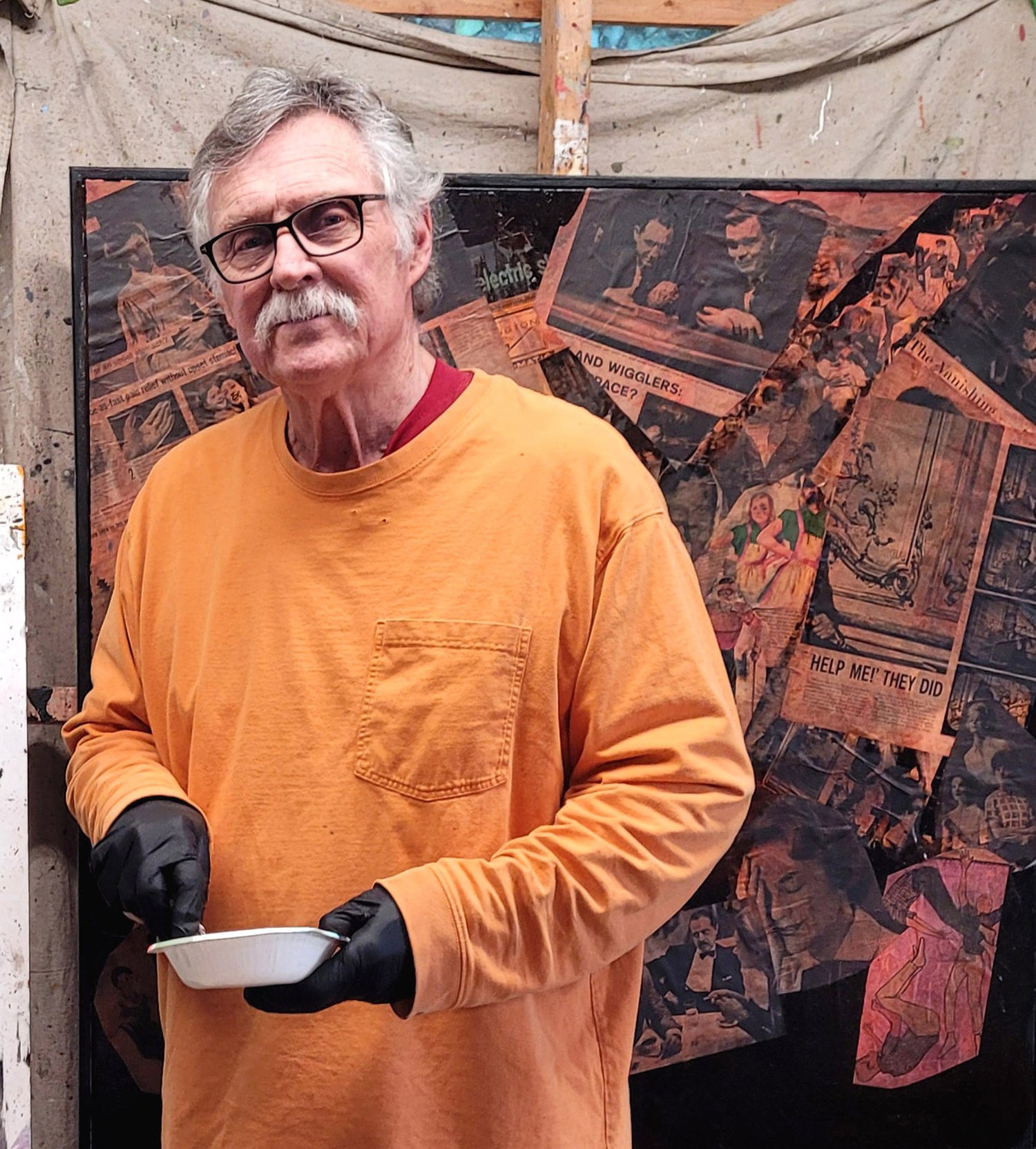
Was there ever a moment of clarity about being an artist?
In the late ’70s, I rented my first studio space in the Carver Hotel in Old Town, Pasadena. Previously a hotel, it was now primarily what were called “artists’ lofts.” The place was full of creative people.
I remember telling myself, “I'm here to paint and be the artist I want to be.”
How does being an artist affect your perception of the world?
My vision of the world has become sharper and clearer because of my artistic background, as I believe experience in this particular field results in a heightened perceptiveness. 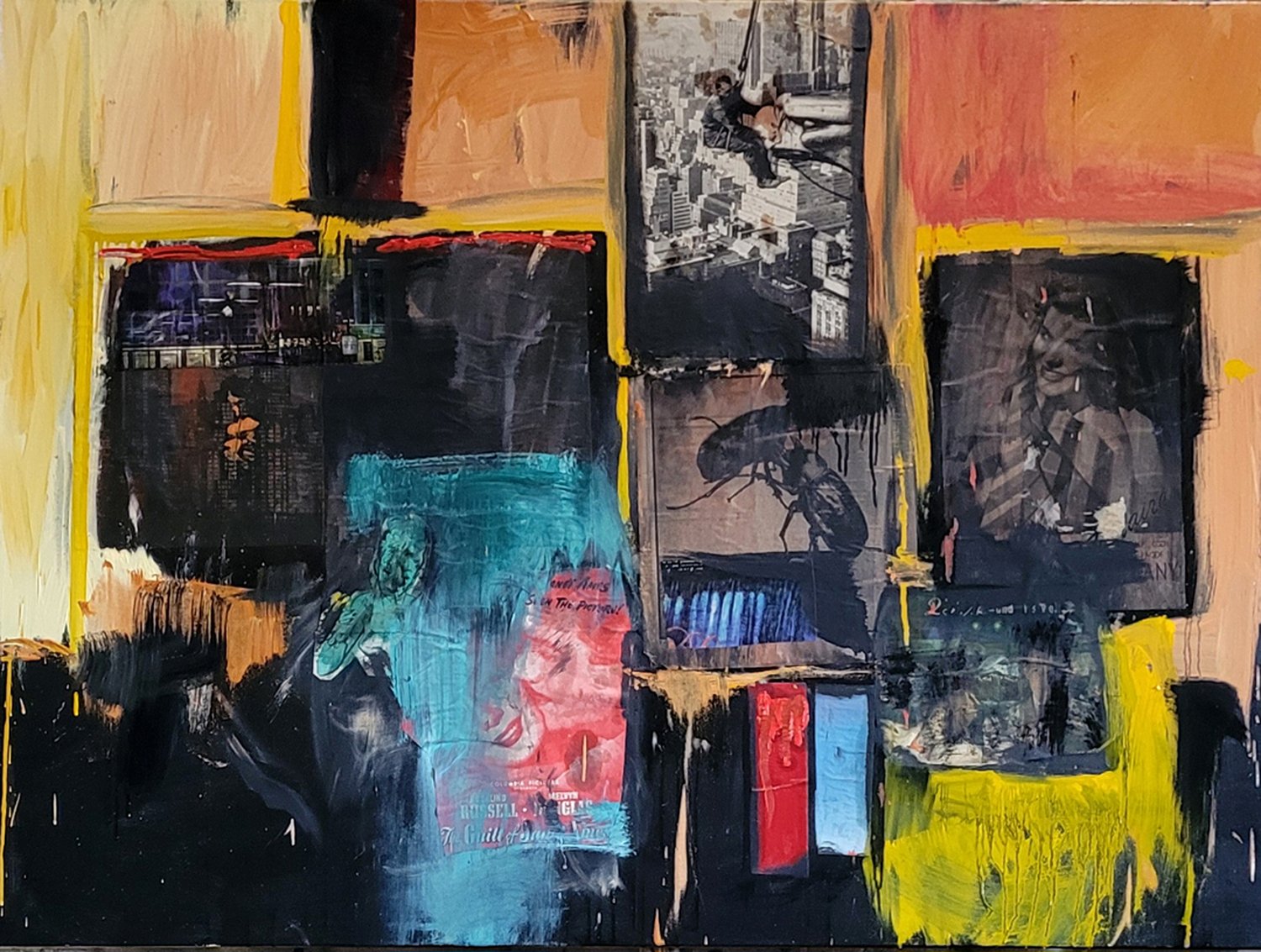
Have other artists inspired your path?
Over the years, many artists and their work have guided me. A few pieces stand out most: Pollock's She-Wolf and Guardians of the Secret, Diebenkorn’s entire Berkeley series, and de Kooning’s Gotham News. I’d include all of Rauschenberg’s Combines and prints, too, but there are so many more.
There’s a Pablo Picasso quote that keeps resonating with me: “It took me four years to learn how to paint like Raphael, but a lifetime to paint like a child.”
What is most meaningful to you about being an artist?
If you’re an artist, then you must create. You really don’t have any other choice.
I am an artist. It’s not just something I do.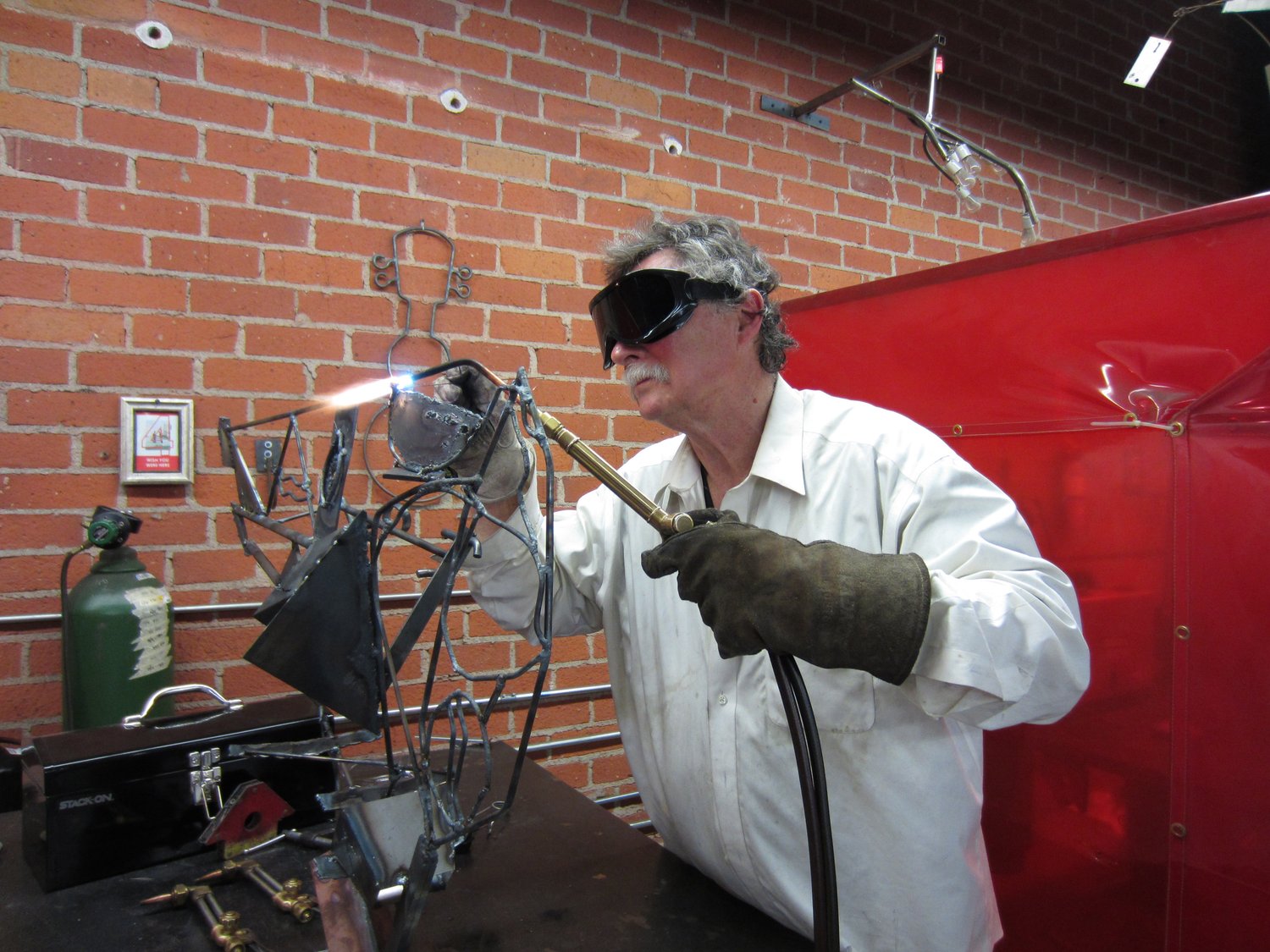
To see more featured TurningArtists, return to our blog. To get William O'Connor's art in your space, set up a free consultation with an Art Advisor here!