Healthcare design is moving toward a more human-centered and evidence-based approach to the built environment. At this year’s Healthcare Design Conference and Expo (HCD), sessions led by leaders in healthcare, architecture, and industry research highlighted how art, nature, restorative spaces, and community identity can actively contribute to better care experiences.
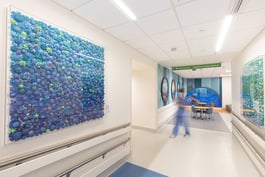
In their session exploring how art can serve as clinical infrastructure and support caregivers, Ryan Patrick, Director of Public Arts and Arts in Medicine Curator at NYC Health + Hospitals, and Marcel Foster, CEO & Co-founder of Performance Hypothesis, highlighted how NYC Health + Hospitals approaches the arts and the built environment as public health interventions. The Curating for Health program curates and commissions art across 11 hospitals and 35+ states. Informed by clinical insights and environmental design principles, each collection is selected to support the specific emotional and functional goals of the space. HHart of Medicine, an evidence-based art observation program targeting staff burnout, and the Community Mural Project, which facilitates a collaborative mural-making process in healthcare spaces to foster a sense of community, offer additional examples of how art can be leveraged as a care strategy. Patrick and Foster highlighted that investing in these kinds of arts-based initiatives directly impacts patient satisfaction, staff retention, and community trust. As the nation’s largest public health system, the impact of these initiatives from NYC Health + Hospitals is especially useful in informing similar programs and frameworks.
These insights point to a larger question for healthcare designers: how can the built environment not only accommodate care but actively contribute to it?
Art as a Clinical Tool
Art can be a powerful tool in clinical environments when integrated thoughtfully and intentionally, and this idea was prevalent throughout the conference. The team at Oregon Health and Science University, Alexandra Pitts, Jessica Mistretta, Susan O’Hara, and Kristen Kelly, showcased the idea of “design as a care plan.” Their post-occupancy study across several OHSU units operationalized elements such as art, daylight, and views of nature, and assessed their impact across patient populations. Rather than validating design intent, this research translates directly into staff training modules and protocols, strengthening the idea of art and design as clinical strategies.
In his session on emerging clinical design trends, Mark Bryan, Chief Research and Strategy Officer at IIDA, highlighted that healthcare design has moved firmly beyond only considering aesthetics and that research-backed interventions with provable outcomes are now a priority.
These sessions not only explored how the built environment can actively shape the care experience, but also showcased the importance of measuring these impacts and using research-backed outcomes to inform future design decisions.
Staff Well-Being
Healthcare design has increasingly recognized the role of the physical environment in supporting patient comfort, recovery, and overall experience. More recently, attention has expanded to the staff experience, presenting new opportunities for healthcare design. As healthcare systems continue to face burnout and retention challenges, the built environment can help support the people who make care possible. Thoughtfully designed staff spaces can provide moments of restoration, reduce environmental stressors, and better respond to the realities of healthcare work.
While this topic has surfaced at past conferences, this year’s sessions further developed the case for supporting healthcare workers through evidence-based design. In their session, “Patient and Staff Experience Drives Evidence-Informed Design”, Matt Krieger of Neumann Monson and Deborah Wingler of HKS presented post-occupancy data linking restorative spaces to improved staff retention and engagement, highlighting the potential value of these interventions.
In their session, “Designing Recovery,” Neil Abrams and Tripti Singh of architecture firm SmithGroup explored the topic further, presenting findings from a national survey of healthcare workers about taking breaks during the workday. Their study addresses gaps in existing research by gathering direct input from healthcare workers about workplace respite, with the goal of better understanding the factors that influence burnout and, in turn, improve patient care. Their findings suggest that simply incorporating biophilic elements is not enough to support staff well-being; break spaces need an evidence-based framework.
Beyond opportunities for restoration, staff well-being also depends on safety. In the session, “Shielding the Frontline,” Rutali Joshi and Whitney Fuessel of HKS and Jacqueline Brock of Harris Health shared that 33% of nurses have considered leaving because of workplace violence, underscoring the importance of designing environments that protect staff as well as support their well-being.
Representing Community
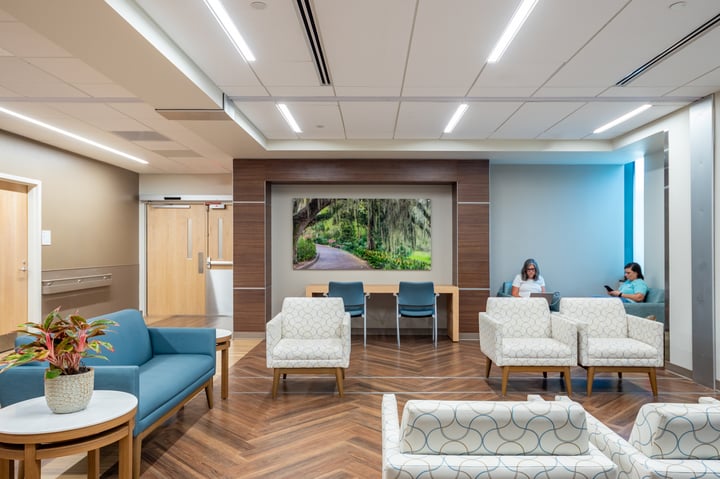
Designing for universal care is essential, but so is having a space feel representative of the surrounding community. In “A Community Imprint Approach”, Kristen Kelly of OHSU and Frances Orona of NBBJ shared a repeatable framework for building community culture into a healthcare space, importantly backed by post-occupancy evaluations. The session validates the importance of creating “bespoke yet inclusive” environments.
Similarly, Saul Jabbawy, Jason Fierko, and Amanda Gee of EwingCole explored how healthcare systems can navigate organizational consolidations without losing local identity in “Designing Without Erasing Place and Community.” Using the South Tower at Geisinger’s Danville campus as the case study, the team demonstrated how they preserved a regional narrative throughout the project, leveraging strategies like local interior design elements, community imagery, curated artifacts, and a patient experience framework grounded in place.
Behavioral Health Design
Another important conversation in healthcare design is the growing emphasis on creating behavioral health environments that prioritize empathetic, human-centered care while incorporating nature as a therapeutic element. These facilities must balance rigorous safety requirements with the need to create spaces that feel welcoming, calming, and supportive of recovery. In their session, “Designing for Healing,” Derek Selke and Jen Worley of BSA explored how thoughtful design can help achieve this balance, supporting effective treatment while creating a more therapeutic environment.
These principles are also shaping the next generation of pediatric behavioral health facilities. In “A New Era in Pediatric Behavioral Health,” Brian Giebink of HDR and project partners presented two recent facilities that reflect a shift toward compassionate, patient- and family-centered care. Beyond behavioral health, nature-inspired design is also becoming more prominent across other healthcare settings. In “Designing the Cancer Center of the Future”, Joseph Rolfes and Sophie Kjeldgaard of HGA explored nature-inspired design rooted in the local setting, showing how facilities can utilize traditional and advanced practices in tandem. Finally, Nathalie Begin and Stephanie Sweet of SmithGroup presented “Empathy as a Design Strategy,” highlighting an empathy-led approach to designing for patients with chronic conditions.
Together, these sessions point to a broader shift toward healthcare environments that respond to patients as individuals, recognizing the role of nature, empathy, and human connection in shaping the experience of care.
How TurningArt Helps Shape Integrated Healthcare Environments
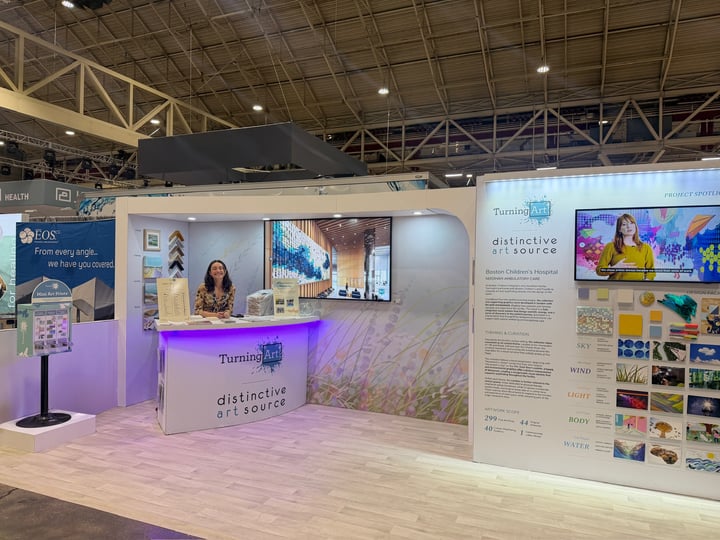
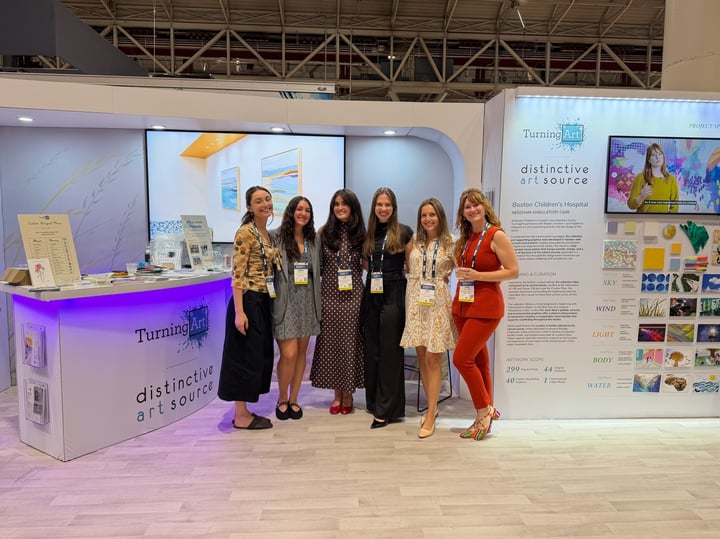
At HCD 2026, the TurningArt team enjoyed connecting with healthcare design professionals and exploring how art can contribute to more integrated, human-centered environments. By partnering with healthcare teams to understand the needs of each environment, TurningArt helps translate these ideas into meaningful art programs. Through thoughtful curation that encourages healing and a sense of place, we help healthcare organizations create spaces that reflect the people who use them while supporting emotional well-being and the delivery of care.
Connect with an Art Advisor below to learn more!