Just as thoughtfully curated interiors shape the user experience within a space, the external environment plays an equally critical role in how people connect with a place.
Placemaking is an urban design process that prioritizes creating spaces with unique identities that people will remember, connect with, and want to return to (Wyckoff, 2014). As consumers increasingly seek out bespoke, experiential spaces, placemaking emerges as a leading design and development strategy to establish an identity that resonates with local values and culture (Mead, 2025).
Creative placemaking encapsulates the active integration of art, music, and cultural programming into the public realm to revitalize shared spaces and foster regional identity (Wyckoff, 2014). According to Americans for the Arts, embedding creative placemaking into public spaces humanizes the built environment, instills a greater sense of localized identity, and nurtures a deeper connection to where we live, work, and visit.
Establishing a Sense of Place Through Art
Incorporating public art into a space is a highly scalable strategy for creating memorable, emotionally resonant experiences. Though often used interchangeably, public art refers to any artwork situated in a physically accessible outdoor space, while civic art is the specific subset that describes artwork specifically designed to reflect local values and build civic pride. When thoughtfully integrated, these interventions make art an accessible part of everyday life, communicate a commitment to community, and transform everyday environments into destinations that people identify with, care about, and return to over time.
Placemaking is about shaping how people experience a space both through how it looks and how it feels. Art is uniquely positioned to support these goals, as it incites curiosity, reflection, and connection in ways that influence how people relate to their surroundings. Emerging research in neuroaesthetics suggests that aesthetic experiences affect the way we perceive and emotionally engage with the built environment, helping create spaces that feel more memorable, meaningful, and human (Djebbara et al., 2024).
Whether celebrating local history and artists or creating opportunities for reflection, discovery, and joy, public art helps transform everyday environments into stimulating places that reflect a community’s identity and foster lasting connections between people and place. It becomes part of how a space is experienced and remembered.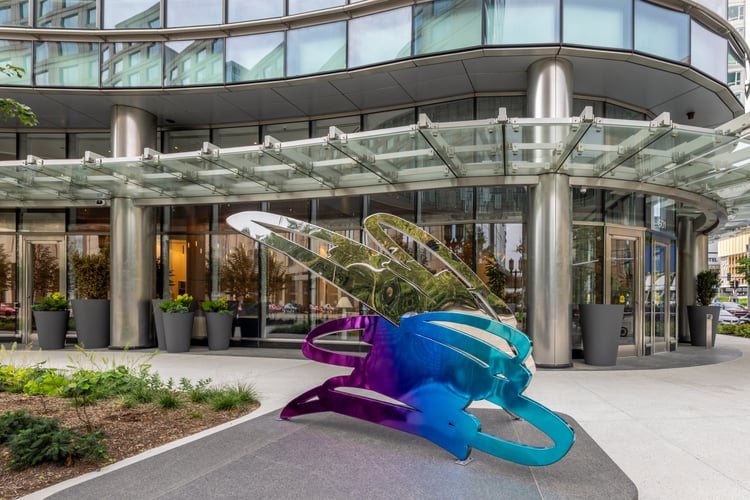
The Impact of Public Art
When thoughtfully integrated, public art helps create destinations that continue to attract residents and visitors over time. Research suggests that spaces offering memorable aesthetic experiences and cultural programming foster stronger emotional connections and encourage repeat visitation (Qian et al., 2026). While public art certainly beautifies a space, the greatest value is the experience it delivers, creating places where people genuinely want to spend time.
The development of meaningful and engaging public and civic art programs begins with an inclusive approach, engaging all stakeholders throughout the design and implementation (Mead, 2025). This ensures that the installation is an authentic reflection of local heritage and shared values. For commercial properties and multi-use developments, incorporating artwork that references local history or identity demonstrates an investment in the surrounding community while helping create spaces that feel more welcoming and connected to the people who use them.
Public art can also reshape how people move through and interact with their environment. Spaces that lack visual interest or opportunities for engagement can be seen as forgettable or uninviting, causing people to simply pass through quickly. By introducing texture, color, and meaningful storytelling into the setting, public art can encourage visitors to slow down, notice their surroundings, and spend more time engaging. Ultimately, these shared experiences contribute to a stronger sense of place, establishing environments that people remember, revisit, and develop an emotional connection with (Markusen & Gadwa, 2010).
This relationship between art and experience has measurable impacts on how public spaces are used. Developers transforming Miami’s Design District deliberately integrated outdoor sculptures and murals throughout the retail-heavy neighborhood, contributing to a 47% increase in foot traffic over four years (Acosta, 2024). Examples like this demonstrate how thoughtful public art can strengthen community engagement, ultimately creating opportunities for local businesses and reenergizing areas as memorable destinations. 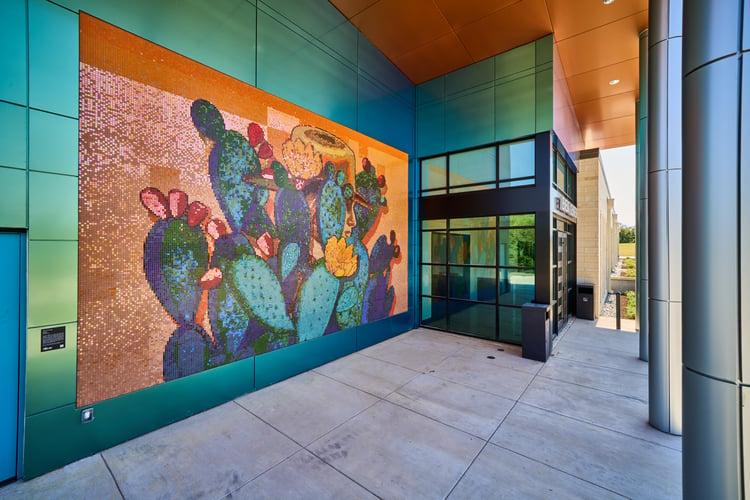
Designing Spaces that Reflect Community
Public art installations can take many forms – rotating sculpture exhibitions, embellished infrastructure, collaborative murals, integrated landscape features, and more – to reflect the unique culture and character of a specific community. This flexibility allows organizations and developers to create programs that encapsulate the identity of a place while honoring project goals.
The most successful public art programs begin by understanding the people who will use the space. Artwork that celebrates local artists, reflects regional stories, or invites community participation creates opportunities for people to see themselves and their communities represented in the built environment, ultimately establishing meaningful spaces that cultivate a sense of belonging.
These place-based connections have a lasting impact. In Canton, Georgia, community-inspired murals have become recognizable landmarks that residents and visitors seek out as gathering places and iconic Instagram photo backdrops, extending the artwork’s impact beyond the physical space itself. The murals have become part of how people experience the city, demonstrating how thoughtfully designed public art can strengthen a community’s identity while encouraging people to engage more deeply with the places they visit.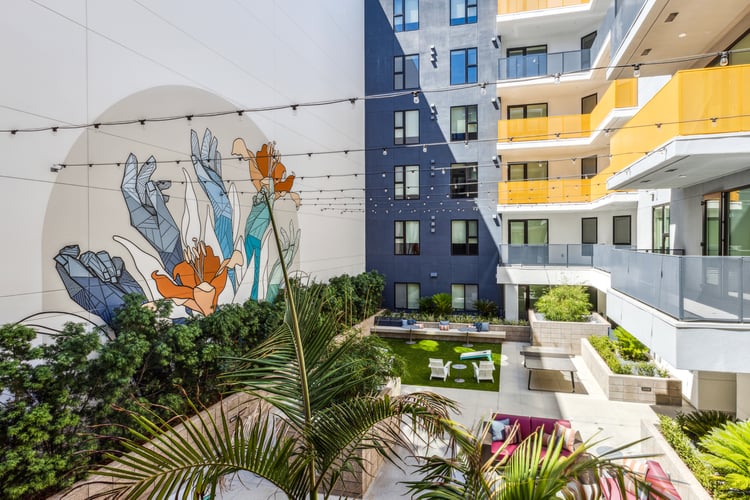
How TurningArt Can Help
At TurningArt, we connect decision-makers with local artists to create public art programs that are authentically rooted in place. From concept through installation, we help curate cohesive, thoughtful art experiences that strengthen a space’s identity while embodying the character of the surrounding community.
Whether the goal is creating a more welcoming aesthetic landscape, celebrating local culture, or strengthening the relationship between people and place, thoughtfully curated public art helps transform environments into memorable destinations.
Want to explore how public art can support your next project? Connect with an Art Advisor below.

.jpg?width=332&height=177&name=_MG_0840%20copy%20(2).jpg)
.jpg?width=332&height=177&name=0046-Interior%20(4).jpg)
.jpg?width=332&height=177&name=dtBv_067_DSC_2139_DaNil%20(2).jpg)
.jpg?width=332&height=177&name=OraSeaport3_6%20(1).jpg)
