As we are increasingly inundated with digital media and plagued with screen fatigue, incorporating art into the built environment has never been more important. Art's impact is gaining credibility and traction in fields such as healthcare, environmental psychology, neuroaesthetics, workplace psychology, and more. Participation in the arts, whether actively creating or passively observing, has noticeable effects on stress, connectivity, and cognition.
Benefit #1: Reducing Stress
When engaging with art, whether viewing or creating it, the brain's Default Mode Network (DMN) is activated. This is one of three major neural networks neuroscientists have identified as responsible for the creative process, in addition to the Executive Control Network (ECN) and the Salience Network (SN). Together, these interconnected regions of the brain support creative expression and cognition (Barnett & Vasiu, 2024).
Dysregulation in the DMN is associated with rumination, habitual negative thinking, and chronic stress. During passive, independent activities, such as imaginative thinking or daydreaming, the DMN is regulated, calming an overactive mind. Studies have shown that this regulation helps process difficult and negative emotions, mitigates rumination loops, and provides overall stress relief. In practice, this can look like viewing aesthetically pleasing art and getting lost in the image, directing the brain away from overthinking tendencies, or losing track of time while painting and listening to music after a stressful day at work (Barnett & Vasiu, 2024).
A recent study by King’s College London identified the physiological response in participants viewing artwork. The participants viewed either original pieces in a gallery or reproductions in a non-gallery environment, and were then monitored for changes in heart rate and skin temperature. The primary stress hormone, cortisol, fell by an average of 22% in the gallery group and 8% in the non-gallery group. Additional markers of stress and chronic disease, pro-inflammatory cytokines, dropped by 30% and 28% for the gallery group, indicating a measurable difference in stress and inflammation levels in participants after viewing the original artwork.
Because long-term stress is linked to adverse health conditions across all systems of the body, finding small ways to mitigate stress in our everyday lives is crucial. Chronic stress can contribute to high blood pressure, inflammation, a weakened immune system, negative mental health outcomes, and more (APA, 2018). Integrating more art into our lives, either on the walls of the rooms we're in every day or as an intentional and calming creative practice, is one feasible way to prioritize health and well-being day-to-day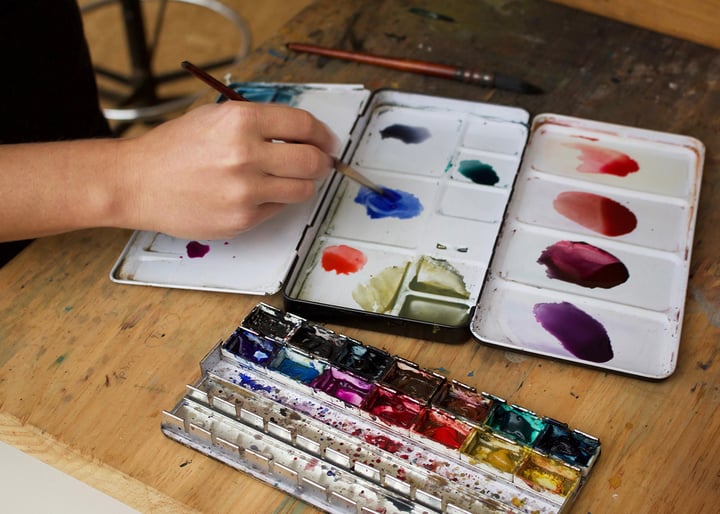
Benefit #2: Fostering Connection
According to positive psychology, the number one predictor of long-term happiness is social belonging and connection (Harvard Health, 2017). As inherently social beings, this makes sense. Our brains have been wired to reward social connection and punish isolation from an evolutionary perspective. Early humans relied on other people for survival, meaning socializing and being accepted within a community could be a matter of life or death. Our brains release three neurochemicals in response to socializing: oxytocin, serotonin, and dopamine, which are the “feel-good chemicals” (UC Berkeley, 2025).
While there are numerous ways to stay social, a recent report from the National Endowment for the Arts describes arts participation as ‘the great connector’ linking people to their communities. According to the study, people who participate in the arts are nearly four times as likely to engage with their community relative to non-participants. Those with the highest levels of engagement consume art in multiple forms, such as attending live events, creating or viewing art, or supporting artists and organizations.
Another example of art fostering connection within communities is the growing movement of social prescribing. This healthcare approach of prescribing community activities instead of medications to treat behavioral health problems began in the U.K. and is now gaining traction globally, including in the United States. In practice, this looks like advising a patient with symptoms of loneliness and depression to attend a group art class or community gardening project (NASP, 2026). A recent “Art on Prescription” program in the U.S. reported significant impact in the community, with around 80% of participants experiencing a meaningful change in feelings of loneliness (PBS, 2026).
The importance of social belonging and well-being is both backed by research and evident in our daily lives. As technology makes it easier to avoid face-to-face interaction, we must be intentional about staying connected to our communities. Participating in the arts, in whatever form, meets our innate need for social connection and, in turn, benefits our well-being.
Benefit #3: Promoting Productivity
By minimizing factors that hinder our thinking, such as stress, and fostering general well-being, art in the workplace can also promote productivity. A study from Johns Hopkins' Center for Applied Neuroaesthetics tracked participants' brain activity as they experienced different styles of decor and art and found that engaging with art has a measurable, positive effect on motivation and self-awareness, two traits directly linked to productivity. (Newsweek, 2025)
Another study from the University of Exeter found that workers in spaces enriched by art and plants were 17% more productive, and workers in spaces they designed themselves were 32% more productive, compared to those in functional, undecorated spaces. This study revealed not only the positive impact of a well-designed office space but also the importance of employee autonomy in office layout and design. The ability to design their own workspace was associated with greater feelings of satisfaction and motivation at work.
Amid the rise of the hybrid work model, it’s even more important for office spaces to be conducive to employees' needs. Coming into the office must be worthwhile and productive; otherwise, the incentive to commute diminishes.
How TurningArt Can Help
Whether encountered in a museum exhibit, a community art class, or an employee-picked office collection, creativity's impact is measurable and scientifically supported. It eases stress, sharpens focus, and helps us feel connected to the people and places around us.
At TurningArt, we bring this approach into the built environment by partnering with organizations to develop and manage customized art programs that align with their culture and the needs of their people. Our team of art advisors leverages art as a strategic tool for creating intentional environments and supporting broader organizational goals.
Connect with an Art Advisor below to learn more!

.jpg?width=332&height=177&name=0046-Interior%20(4).jpg)
.jpg?width=332&height=177&name=_MG_0840%20copy%20(2).jpg)
.jpg?width=332&height=177&name=dtBv_067_DSC_2139_DaNil%20(2).jpg)