When people describe art as “calming,” “grounding,” or “restorative,” they’re often describing a real biological shift.
Over the last decade, neuroscience has begun to clarify how creative engagement, such as viewing art, discussing it, interacting with it, or making it, affects the brain systems responsible for emotional processing and resilience. These effects are especially relevant in behavioral health environments, where patients and staff alike are navigating chronic stress and cognitive fatigue.
Our whitepaper, Art as Infrastructure in Behavioral Health, synthesizes this emerging research to move beyond intuition and aesthetics. The findings suggest that creativity is not simply expressive or symbolic, it is neurobiological, engaging core brain networks involved in recovery.
Creativity as a Coordinated Brain Process
Creativity is often misunderstood as spontaneous or purely emotional. Neuroscience tells a different story. Researchers have identified seven core large-scale brain networks that underpin most cognitive and emotional processes.
Brain networks are interconnected groups of brain regions that work together to perform specific functions, such as thinking, feeling, and decision-making. Rather than operating in isolation, these regions communicate through neural connections to support complex behaviors. Creative engagement activates and integrates multiple large-scale brain networks at once, including systems that typically operate in tension with one another. This kind of coordination is rare in everyday cognition and may help explain why art feels uniquely regulating and restorative.
Research consistently points to the interaction of three major networks during creative engagement:
-
The Default Mode Network (DMN)
- The Executive Control Network (ECN)
- The Salience Network (SN)
Together, these networks support meaning-making, cognitive control, and emotional relevance.
The Default Mode Network: Meaning, Memory, and Self-Reflection
The Default Mode Network is most active during internally oriented thought, i.e., reflection, autobiographical memory, imagination, and self-referential processing.
In behavioral health contexts, this network is especially important. It is implicated in how individuals interpret their experiences, construct narratives about themselves, and integrate emotional memory. Dysregulation of the DMN has been associated with rumination in depression and intrusive self-referential thought in anxiety and trauma-related conditions.
Art engagement naturally recruits the DMN by encouraging personal interpretation rather than fixed answers. Whether through viewing or creating, art invites individuals to reflect, project meaning, and connect sensory input to internal experience.
Notably, research suggests that art-making, in particular, increases DMN connectivity and may strengthen self-referential processing in adaptive ways: supporting psychological resilience rather than rumination.
The Executive Control Network: Structure, Focus, and Regulation
The Executive Control Network governs attention, planning, and cognitive regulation. It allows individuals to organize thoughts, evaluate choices, and maintain goal-directed behavior.
In creative contexts, the ECN plays a crucial role in shaping expression: deciding how to structure a piece, refine an idea, or sustain focus during engagement. This is particularly relevant in clinical settings, where cognitive overload or emotional distress can impair executive functioning.
Creative tasks that balance openness with structure appear to activate the ECN in a supportive way, allowing individuals to engage without overwhelming demands. This balance is one reason guided art engagement and facilitated art-making can be effective even for individuals experiencing acute distress.
Studies show increased coordination between the DMN and ECN during creative cognition: a pattern associated with cognitive flexibility and adaptive problem-solving.
The Salience Network: Emotional Relevance and Attentional Shifts
The Salience Network acts as a mediator between internal and external attention. It determines what is emotionally or cognitively significant and helps the brain shift between reflective and goal-oriented states.
In stressful environments, such as behavioral health facilities, the salience network is often hyperactivated by threat, unpredictability, or emotional intensity. This can lock individuals into survival-oriented attention patterns. Art provides an alternative salience signal.
Research shows that engaging with art activates regions associated with emotional significance and sensory grounding, allowing the salience network to redirect attention toward stimuli that are meaningful but non-threatening. This shift supports regulation rather than hypervigilance.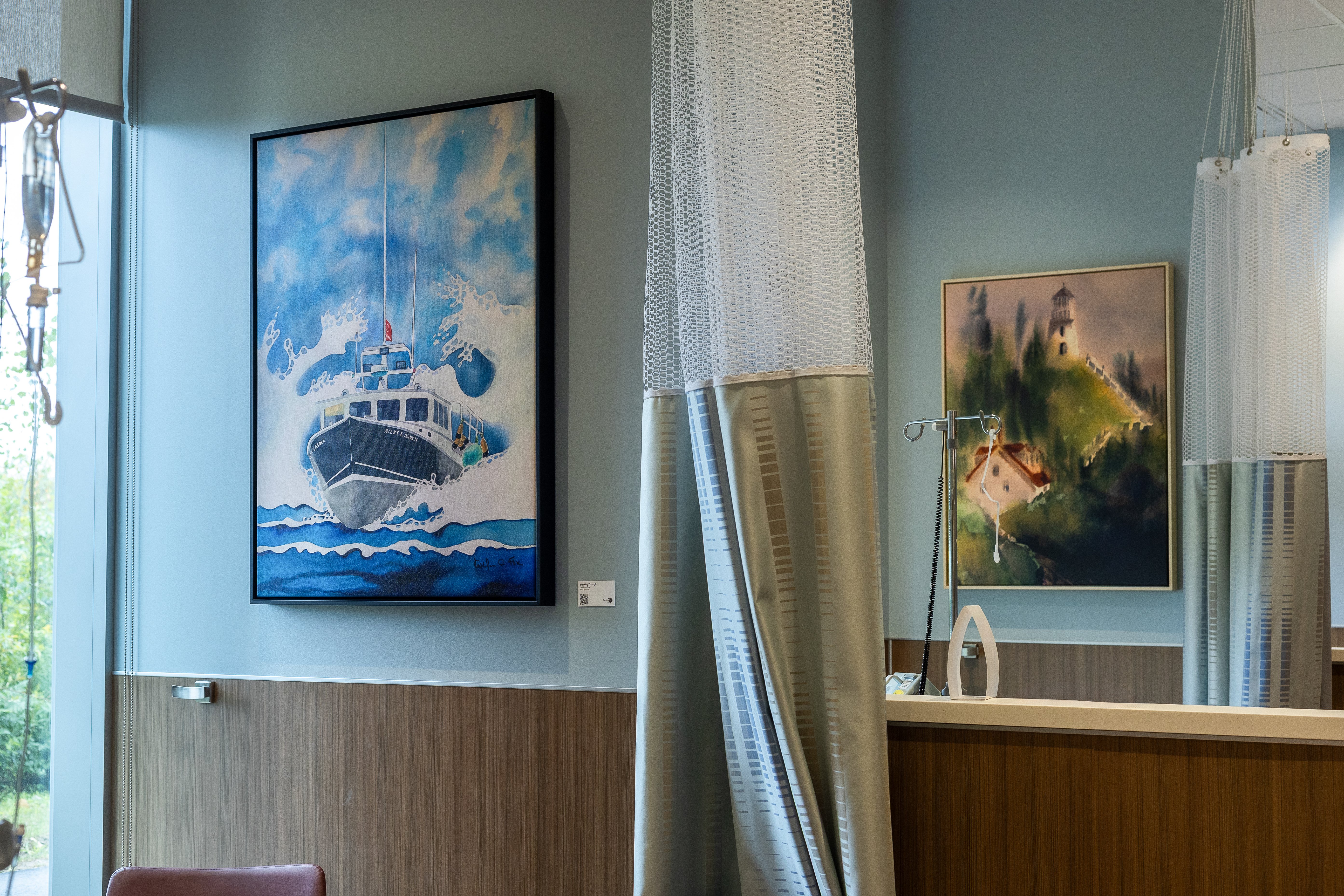
Why Network Integration Matters for Recovery
What makes art neurologically distinctive is not the activation of any single network, but the integration of all three.
In behavioral health, many symptoms can be understood as breakdowns in network coordination:
-
Excessive DMN activity without regulation (rumination)
- Impaired ECN control under stress
- Hyperactive salience signaling around threat
Creative engagement offers a rare opportunity for these systems to work together. This integration supports:
-
Cognitive flexibility
- Emotional regulation
- Adaptive meaning-making
In recovery-oriented care, these capacities are foundational.
Art and the Biology of Stress Reduction
Beyond brain networks, art engagement has measurable physiological effects.
One of the most robust findings in the literature is cortisol reduction following art-making, regardless of prior artistic experience. Cortisol is a primary stress hormone, and chronically elevated levels are associated with anxiety, depression, burnout, and impaired immune function.
Art engagement has also been linked to:
-
Lowered blood pressure
- Reduced heart rate in some contexts
- Activation of emotion-regulation circuits involving the medial prefrontal cortex, amygdala, anterior cingulate cortex, and orbitofrontal cortex
.jpg?width=8256&height=5504&name=Final_CIHA_4%20(1).jpg)
Nonverbal Pathways to Emotional Regulation
A critical insight from neuroscience is that emotional regulation does not rely solely on language.
Art engages brain regions involved in affective processing and regulation without requiring verbal articulation. This makes it especially valuable for individuals who:
-
Struggle with talk-based therapy
- Experience trauma-related language disruption
- Feel overwhelmed by direct emotional disclosure
Research reviewed in the whitepaper highlights how art engagement supports emotion regulation by offering symbolic, sensory, and embodied pathways into processing experience.
In behavioral health settings, this can translate into improved engagement, reduced agitation, and increased emotional expression, often before verbal insight is possible.
Creativity, Neuroplasticity, and Resilience
Repeated engagement with creative processes may also support neuroplasticity: the brain’s capacity to adapt and reorganize.
Emerging evidence suggests that the brain networks activated through creativity overlap with regions associated with synaptic plasticity and adaptive change. While causal pathways are still being studied, these findings point to creativity as more than momentary relief.
Resilience depends not just on reducing stress in the moment, but on strengthening the brain’s ability to adapt over time. Creative engagement may help build this capacity by repeatedly activating flexible, integrative neural patterns.
Implications for Behavioral Health Environments
Taken together, this neuroscience reinforces a central conclusion of our research:
Art is not an accessory to care: it is a functional component of how environments support regulation and recovery.
When integrated intentionally, art:
- Engages neural systems tied to emotional regulation
- Reduces physiological stress
- Supports cognitive flexibility
- Provides nonverbal pathways into healing
In behavioral health settings, where the environment itself shapes experience, creativity becomes part of the therapeutic infrastructure.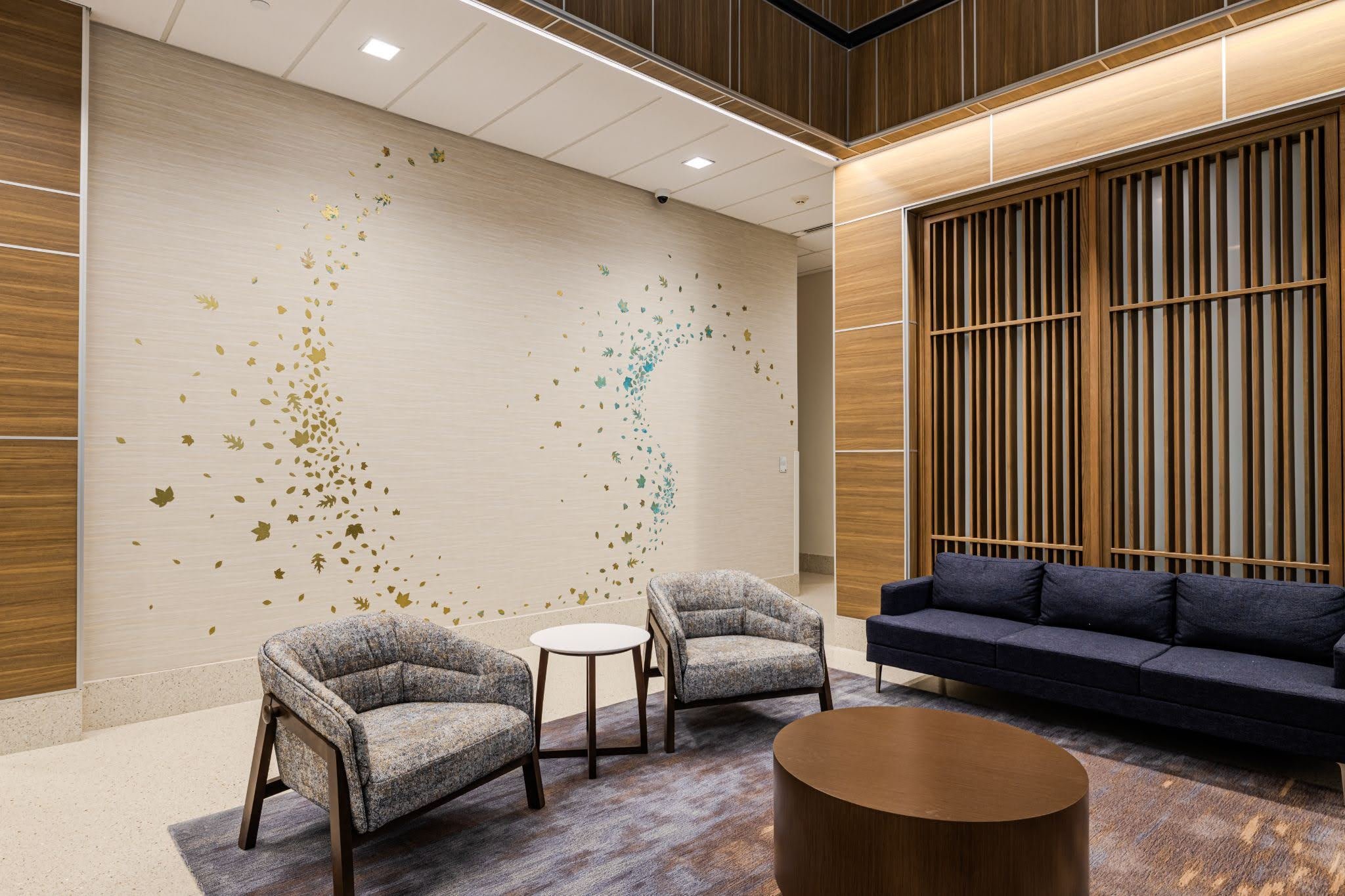
Connect with an Art Advisor below to learn more!

.jpg?width=332&height=177&name=_MG_0840%20copy%20(2).jpg)
.jpg?width=332&height=177&name=dtBv_067_DSC_2139_DaNil%20(2).jpg)
.jpg?width=332&height=177&name=0046-Interior%20(4).jpg)