As hybrid work, digital acceleration, and evolving employee expectations reshape how and where work occurs, many physical environments still reflect models optimized for outdated measures of efficiency rather than human variability.
In their recent webinar, “The State of the Workplace: Insights Shaping What’s Now and Next,” workplace design industry leaders shared insights from Stantec’s recent Workplace Strategy Report, emphasizing that human capital remains the most important organizational asset. Performance, innovation, and long-term resilience depend on how effectively organizations support the people who generate value. Furthermore, as the workforce drives organizational outcomes, the environments that shape workforce experience influence how fully workforce potential is realized.
However, current workplaces are not meeting employee needs. According to Gensler’s 2025 Global Workplace Survey, only 38 percent of employees strongly agree that their workplace provides a great experience. The impact of a strong workplace experience is notable: 90% of employees in experience-driven spaces report pride in their organization.
Investing in employee experience is a direct investment in organizational success, as employee engagement is a critical indicator of business health.
Human Capital as an Organizational Asset
Human capital encompasses the skills, creativity, and problem-solving capacity individuals bring to their organizations. Working styles and cognitive approaches are incredibly diverse, and this variation has the potential to strengthen teams and expand innovation when appropriately supported. However, support is often inconsistent, as 57% of the average employee's workweek is spent in environments or activities that do not align with their optimal cognitive processing styles (Stantec, 2026). When environmental conditions don’t align with cognitive needs, performance potential remains underutilized.
Performance outcomes are closely associated with adaptability. Organizations actively supporting different working styles see a 35% improvement in complex problem-solving tasks (McKinskey, 2025), and companies with inclusive practices for different thinking styles report 33% higher productivity and are twice as likely to meet financial targets (Accenture, 2025). These findings suggest that effective workplaces account for diverse employee needs and working preferences, positioning workplace design as a direct contributor to business outcomes. .jpg?width=750&height=499&name=Final_FenwayCapital_1%20(2).jpg)
The Importance of the Environment
Environmental conditions impact attention, stress regulation, emotional states, and social interaction patterns. With increasing technology usage, this overstimulation and constant digital engagement can inhibit creativity and critical thinking. Additionally, hybrid work models have reduced informal in-person interactions essential to generating innovation (Stantec, 2026).
Empirical research supports the connection between environmental quality, employee productivity, and behavioral outcomes (Dumitriu et al., 2025). Additionally, there are demonstrated links between positive emotional experiences in work contexts and increased resilience, well-being, and performance outcomes (Zhu, 2025). These findings reinforce the importance of design, demonstrating how environmental quality contributes to the way individuals engage with their work.
Furthermore, the environment can impact how employees perceive institutional support. A thoughtfully designed space can communicate organizational priorities and leadership values through layout, support infrastructure, and spatial hierarchy. (Forbes, 2025).
Designing for Experience in a Hybrid Era
Hybrid work has introduced new structural conditions that require intentional design responses. While hybrid models allow for flexibility, they also increase fragmentation in the workplace, and organizations must implement strategies to balance autonomy with cohesion and connection (Stantec, 2026).
Innovation depends on both focused individual work and opportunities for social interaction. Strategic spatial planning can facilitate this balance by clearly defining zones for concentration alongside areas designed for collaboration.
Art is a valuable, scalable resource in shaping these differentiated environments, as visual stimuli influence cognitive and emotional states, with certain characteristics supporting stimulation and others encouraging reflection (Trupp et al., 2025). Thoughtfully integrated art can signal a space’s purpose, helping employees navigate between modes of work and ultimately strengthening cognitive regulation in the workplace.
In 2026, social connection will be a key performance indicator as technology becomes more powerful and potentially isolating (Work Design Magazine, 2025). Additionally, Gensler’s recent research on workplace design positions the feeling of belonging as a measurable outcome of spatial strategy, as it impacts employee performance and communicates organizational investment in the workforce. 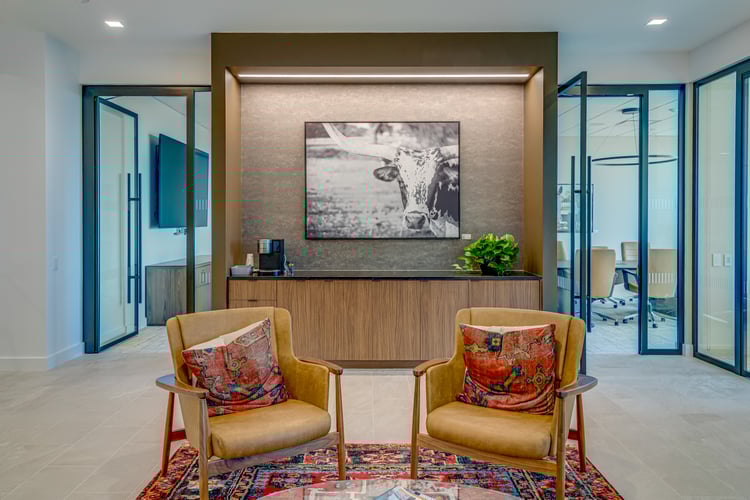
The Role of Art in Workplace Experience
There are many adaptable strategies to introduce environmental differentiation that can be integrated without major renovation and within architectural constraints. Incorporating art is a flexible and scalable strategy for shaping how space is interpreted and used (Work Design Magazine, 2025). Strategically selected and placed art can differentiate working zones, signaling different purposes such as independent work vs. collaboration. Clearly defining spaces that support different working styles allows employees to perform to their full potential, ultimately contributing to employee engagement and organizational success (Stantec, 2026).
As inclusive environments and belonging become increasingly recognized as performance drivers, visual identity and representation within a space function as meaningful tools that strengthen connection and engagement.
How TurningArt Can Help
As optimizing human capital emerges as a key workplace strategy, the visual environment can be leveraged for organizational success. Designing workplaces that workforce potential requires a visual strategy that actively supports how people focus, collaborate, and regulate their cognitive load.
At TurningArt, we partner with organizations to develop and manage customized art programs that align with their company culture and workforce needs. Our approach is rooted in the understanding that art is a strategic tool for creating intentional environments and achieving broader organizational goals. Through a thoughtfully curated collection, we help transform the office space into an experience-driven destination.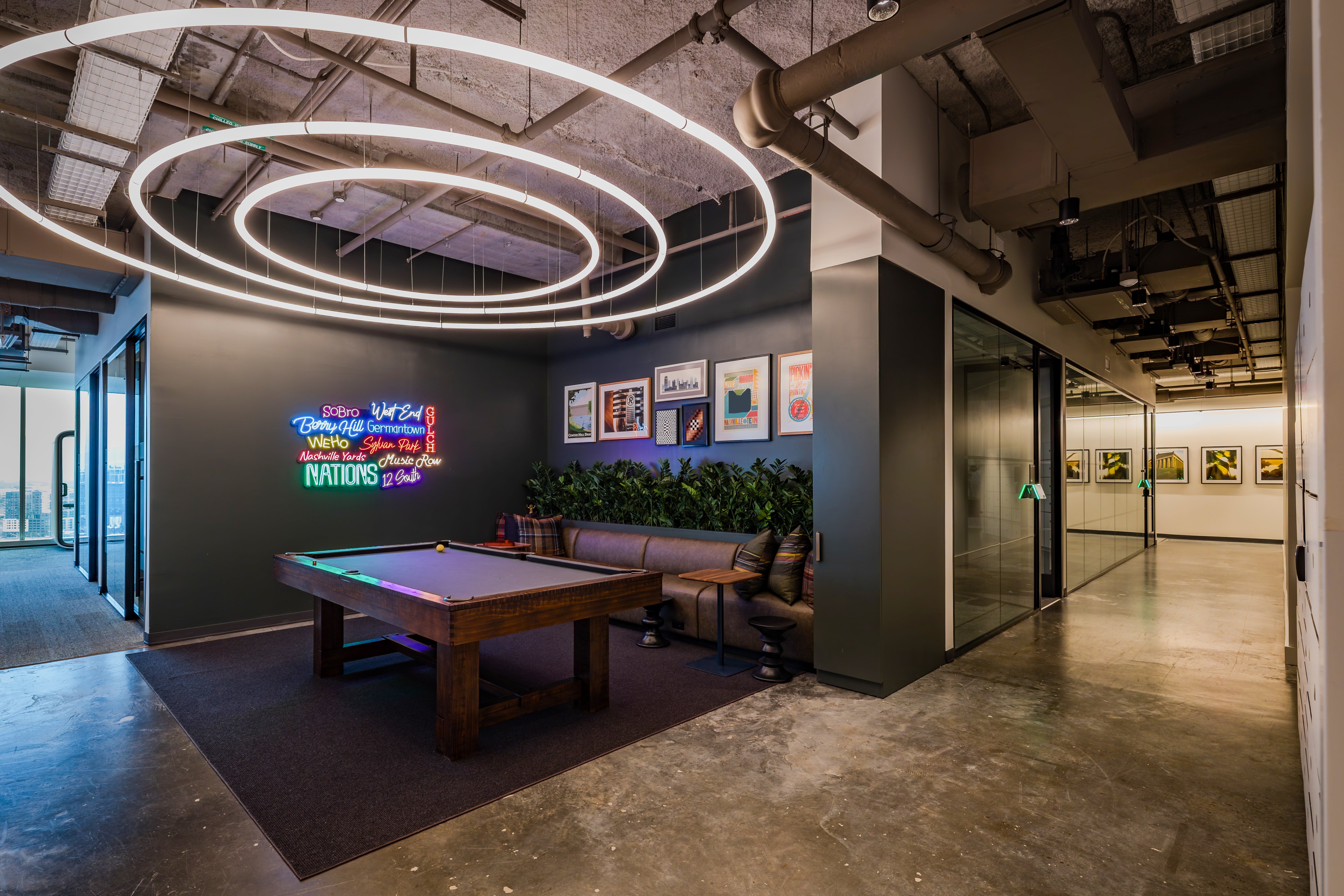
Connect with an Art Advisor below to learn more!

.jpg?width=332&height=177&name=_MG_0840%20copy%20(2).jpg)
.jpg?width=332&height=177&name=dtBv_067_DSC_2139_DaNil%20(2).jpg)
.jpg?width=332&height=177&name=0046-Interior%20(4).jpg)
.jpg?width=332&height=177&name=OraSeaport3_6%20(1).jpg)
